
Affiliate Disclosure: This post contains Amazon affiliate links. If you purchase through these links, we earn a small commission at no extra cost to you.
Why Dogs Overheat Faster Than Humans
During my five years working as a vet tech at a mixed-practice clinic in Portland, the first heatwave of the year always brought a rush of emergencies. Dogs don't sweat the way we do. Their primary cooling mechanism is panting. It isn't nearly as efficient as perspiration. They also have limited sweat glands. These sit mostly on their paw pads. Add a fur coat that traps heat, and you've got an animal highly vulnerable to temperature spikes.
Brachycephalic breeds (flat-faced dogs like Bulldogs, Pugs, and Boston Terriers) are at even higher risk. Their shortened airways make panting less effective. Senior dogs, puppies, overweight dogs, and double-coated breeds also need extra help. My 9-year-old lab/pit mix, Benny, falls right into that senior category.
Here are 12 practical strategies I use to keep dogs safe in the heat.
Try our free tool: Heat Safety Calculator -- check if today's conditions are safe for your dog based on temperature and humidity.
1. Provide Unlimited Fresh Water
Dehydration sneaks up fast. You need fresh, clean water available everywhere—indoors, outdoors, and on walks.
Tips for hydration:
- Place multiple water bowls around your home and yard
- Carry a collapsible bowl and water bottle on every walk
- Add ice cubes to bowls to keep water cool longer
- Consider a PetSafe Drinkwell Fountain (I've noticed dogs consistently drink more from a moving water source)
2. Invest in a Cooling Mat
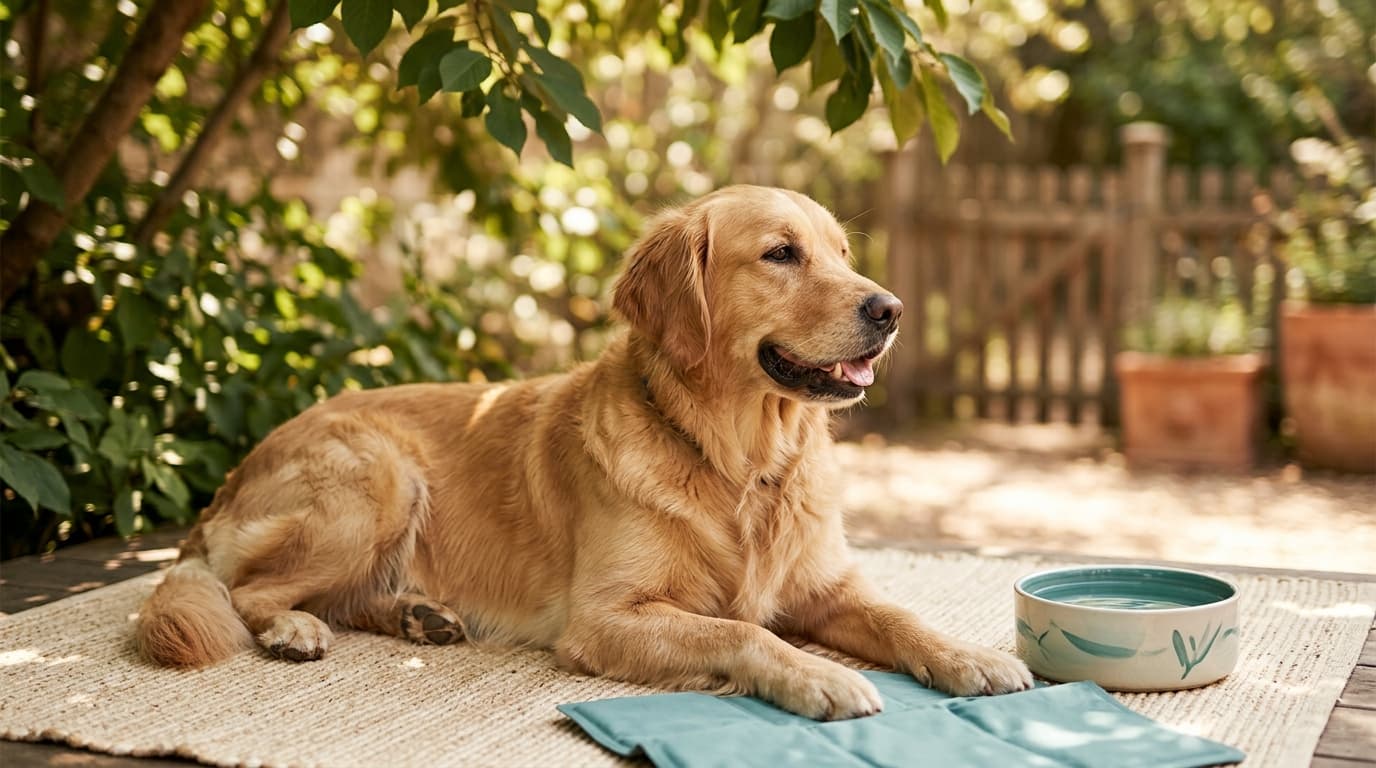
Cooling mats use a pressure-activated gel that absorbs body heat. No electricity or refrigeration required. (A huge plus when you're already tripping over dog toys).
Place one in a favorite resting spot, in their crate, or near a door.
My recommendation: The Arf Pets Self-Cooling Mat. I've tracked over 600 dog products in my testing spreadsheet since 2019. That includes a dozen cooling mats. What sealed it for me here is the durability. Three summers in, it still holds up to Benny's heavy nesting habits. It recharges automatically after 15 to 20 minutes of non-use. Benny basically lives on the large size from July through September to soothe his hip dysplasia.
3. Shift Your Walk Schedule
Walk your dog before 8 AM or after 7 PM. Midday walks on hot days are a fast track to heatstroke and burned paw pads. My 2-year-old Australian shepherd, Maple, goes stir-crazy by noon. But we still wait for dusk.
The seven-second rule: Place the back of your hand flat on the pavement for seven seconds. If it's too hot for your hand, it's too hot for their paws.
4. Make Frozen Treats
Frozen treats cool a dog down from the inside out. They also buy you some quiet time.
Simple frozen treat ideas:
- Freeze low-sodium chicken or beef broth in ice cube trays
- Fill a KONG with peanut butter and freeze it overnight
- Blend seedless watermelon with plain yogurt and freeze in molds
- Freeze blueberries in water for pup-sicles
Never use anything with xylitol, grapes, raisins, chocolate, or macadamia nuts. I saw too many toxicity cases at the clinic from well-meaning owners sharing human popsicles.
5. Create Shade in Your Yard
If your dog spends time outdoors, they need shade at all times. Remember that shade shifts throughout the day. A cool spot at 10 AM might be baking in full sun by 2 PM.
Options for shade:
- Trees and natural vegetation
- A pop-up canopy or shade sail
- A covered patio or porch
- A large outdoor umbrella anchored securely
Never rely on a doghouse for summer shade. Doghouses trap heat. They're essentially ovens.
6. Set Up a Kiddie Pool
A basic plastic kiddie pool is the cheapest cooling tool you can buy. Fill it with a few inches of fresh water. Let them wade or splash.
I set these up monthly during the summer when I volunteer at Multnomah County Animal Shelter. It's cheap, effective enrichment. Just change the water daily to stop mosquito breeding, and always supervise your dog around water.
7. Use a Cooling Vest
Sometimes you can't avoid the heat. Working dogs, hikers, or high-energy breeds still need an outlet. A good cooling vest lowers body temperature by several degrees.
How they work: Soak the vest in water, wring it out, and put it on. Evaporation pulls heat away from the body. It works exactly like putting a wet towel on your own neck.
My recommendation: The Ruffwear Swamp Cooler. I tested this against the Hurtta Cooling Wrap. The Ruffwear provides better coverage and stays put when Maple gets the zoomies. It's totally worth it. The honest downside is the weight. It gets heavy when fully soaked. I'd skip this if you have a tiny toy breed who hates wearing clothes.
8. Never Leave Your Dog in a Parked Car
I can't state this strongly enough. On an 85-degree day, a car interior hits 120 degrees in 30 minutes. Cracking the windows doesn't help. Dogs die in hot cars every summer.
- Leave your dog at home if they can't come inside the store
- "Just a few minutes" is how most fatal heat strokes happen
- Many states allow bystanders to break windows to rescue distressed animals
9. Protect Their Paws
Asphalt, sand, and artificial turf will burn paw pads. Those burns range from mild redness to severe blisters requiring veterinary treatment (I've seen too many paw pad burns that could've been easily avoided).
Prevention strategies:
- Walk on grass or dirt whenever possible
- Use the seven-second hand test
- Consider Musher's Secret Paw Wax for a protective barrier (I've used it for four years now)
- Dog booties work well, but here's the thing: most dogs hate them initially. It usually takes two weeks of short, positive training sessions before a dog accepts them.
10. Keep Your Home Cool
Ensure your dog has a cool indoor space during peak heat.
- Run the AC or fans
- Close blinds on sun-facing windows
- Give them access to cool tile or hardwood floors (Benny always prefers the bathroom tile over his plush bed in August)
- If you don't have AC, combine a floor fan with a cooling mat
11. Know the Signs of Heatstroke
Heatstroke is a life-threatening emergency. Recognizing early signs saves lives. I've seen this go wrong too many times.
Early warning signs:
- Excessive, heavy panting
- Drooling thick, ropey saliva
- Bright red tongue and gums
- Restlessness or agitation
- Uncoordinated movement
Advanced signs (seek emergency care immediately):
- Vomiting or diarrhea
- Gums turning pale, gray, or blue
- Collapse or inability to stand
- Seizures
- Loss of consciousness
If you suspect heatstroke:
- Move your dog to shade immediately
- Apply cool (not ice cold) water to their neck, armpits, and groin
- Place wet towels on their body, replacing them frequently as they absorb heat
- Offer small amounts of cool water
- Get to an emergency clinic fast
Don't use ice water. Never submerge a dog in an ice bath. Extreme cold causes blood vessels to constrict, which actually traps heat in their core.
12. Adjust Exercise Intensity
Want a complete summer safety setup? Our Dog Summer Cooling Kit bundles cooling mats, vests, and hydration gear together.
Reduce duration and intensity on hot days. A 30-minute game of fetch at noon in July will trigger heatstroke in a perfectly healthy dog. Even Maple has to settle for low-impact games when it gets hot.
Smart summer exercise:
- Swim instead of run (swimming is excellent exercise that keeps body temps low)
- Play indoor puzzle games on the hottest days
- Shorten walks and take frequent rest breaks
- Watch for fatigue: slowing down, heavy panting, or lying down mid-walk
Summer Should Be Fun
With a little planning, summer is highly enjoyable for you and your dog. You've just got to be proactive. Set up the cooling tools, adjust your schedule, and pay attention. They can't tell you they're overheating in words. But they'll definitely show you if you know what to look for.
Related Reading
- Best Cooling Mats for Dogs -- Detailed mat reviews and comparisons
- Best Portable Dog Water Bottles -- Stay hydrated on summer walks
- Best Dog Hiking Gear -- Trail-ready cooling vests