
The Great Debate
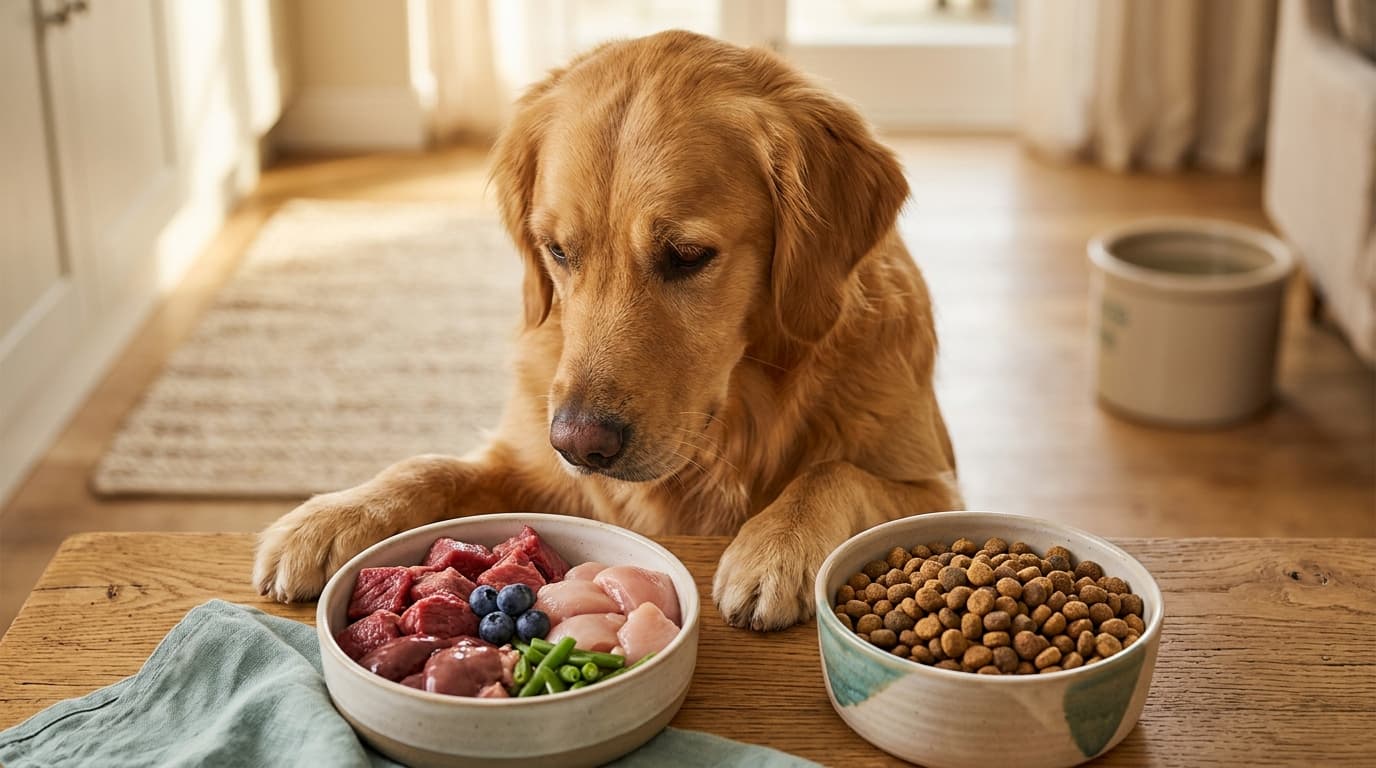
Few topics in the dog world generate more passionate disagreement than dog food. When I worked as a vet tech at a mixed-practice clinic in Portland, I saw this fight daily. Raw feeding advocates claim a raw diet mirrors evolution. They promise it produces superior health. On the flip side, veterinary nutritionists point to decades of research. They support commercially formulated kibble as the safest bet.
It's far more nuanced (and neither camp likes to admit it).
Understanding AAFCO Standards
Before diving into the debate, you've got to understand AAFCO. The Association of American Feed Control Officials sets the nutritional standards pet food manufacturers must meet. A food labeled "complete and balanced" gets formulated to hit specific nutrient profiles. It contains the exact minimum (and maximum) levels of every nutrient your dog needs.
Here's the thing. This standard matters deeply. Nutritional imbalance remains the biggest problem with homemade raw diets. When I worked at the clinic, I saw the fallout firsthand (it isn't pretty). A 2019 study published in the Journal of the American Veterinary Medical Association proved this point. They found that 95% of homemade dog food recipes lacked at least one essential nutrient.
The Case for Kibble
Benefits
Nutritional completeness. Quality kibble from brands employing board-certified veterinary nutritionists covers all the bases. Brands like Purina Pro Plan, Hill's Science Diet, and Royal Canin do this right. You won't need supplements.
Food safety. Kibble goes through high-temperature processing called extrusion. This kills harmful bacteria including Salmonella, E. coli, and Listeria. It protects your dog and the humans in your house.
Convenience. It's shelf-stable and easy to portion (a major plus when you're tired). It doesn't require refrigeration. For most families, that's a massive practical advantage.
Cost. Feeding a 50-pound dog quality kibble costs roughly $50 to $80 per month. The exact same dog on a commercial raw diet runs $150 to $300 monthly.
Research backing. The largest, longest-lived populations of dogs in scientific studies ate commercial kibble. It doesn't prove kibble's flawless. It simply demonstrates that dogs thrive on it.
Drawbacks
Processing. High-temperature extrusion can reduce the bioavailability of some nutrients (though reputable manufacturers compensate for this in formulation).
Fillers and additives. Lower-quality kibbles often contain excessive carbohydrates, artificial colors, and preservatives. It's a product quality issue, not an inherent problem with kibble itself.
Dental claims are overstated. Despite the marketing, most kibble doesn't significantly clean teeth. My two-year-old Australian shepherd, Maple, inhales her food so fast she rarely chews it. The pieces get swallowed too quickly to provide meaningful abrasion.
Palatability. Some dogs simply find kibble less appealing than fresh or raw food.
The Case for Raw Feeding
Benefits
Palatability. Nearly every dog I've observed enthusiastically eats raw food. For dogs with poor appetites, this is worth it.
Coat and skin improvements. Many raw feeders report shinier coats and reduced itching. This likely stems from the higher fat content and specific fatty acid profiles found in raw meat.
Smaller, firmer stools. Raw-fed dogs typically produce less waste. The food's highly digestible. Stools end up smaller, firmer, and noticeably less odorous.
Dental benefits. Raw meaty bones provide genuine mechanical cleaning for their teeth. Raw feeding definitely holds up over kibble here (though it comes with fracture risks).
Risks
Bacterial contamination. The honest downside? Bacteria. A 2012 study in the Canadian Veterinary Journal found Salmonella in 20% of commercial raw dog food samples. Dogs can shed these bacteria without showing any symptoms at all. This puts immunocompromised humans, elderly family members, and young children at serious risk.
Nutritional imbalance. Unless you're working with a board-certified veterinary nutritionist (DACVN), homemade raw diets almost always lack crucial nutrients. Commercial raw diets also vary widely in quality.
Bone hazards. Cooked bones splinter, which makes them dangerous. Raw bones can still cause tooth fractures, esophageal obstruction, and intestinal perforation. I assisted on too many emergency surgeries for bone obstructions during my clinic days to call these complications rare.
Handling and storage. Raw food requires dedicated preparation surfaces and significant freezer space. Cross-contamination's a daily threat.
Cost. As noted above, raw feeding costs two to four times more than quality kibble.
What Veterinarians and Nutritionists Say
Most vets I know recommend against raw diets. The American Veterinary Medical Association (AVMA), the American Animal Hospital Association (AAHA), and the World Small Animal Veterinary Association (WSAVA) all take this stance. The bacterial risks to pets and humans are just too high.
Instead, veterinary nutritionists recommend commercially formulated diets from companies meeting WSAVA guidelines. These companies:
- Employ at least one full-time board-certified veterinary nutritionist
- Conduct AAFCO feeding trials (not just formulation checks)
- Perform quality control testing on ingredients and finished products
- Publish peer-reviewed research
The brands consistently meeting these criteria include Purina Pro Plan, Hill's Science Diet, Royal Canin, Eukanuba, and Iams. What sealed it for me was seeing my senior lab/pit mix, Benny, regain his mobility on a joint-specific prescription kibble from one of these brands.
Try our free tools: Raw Feeding Calculator for raw diet portions, or Food Calculator for kibble portions.
A Middle Ground: Gently Cooked and Fresh Food
I'd skip this if you're on a tight budget, but gently cooked diets offer a solid compromise. If you want whole-food ingredients without the bacterial risks of raw feeding, look into brands like The Farmer's Dog, JustFoodForDogs, and Nom Nom. They'll deliver pre-portioned, human-grade meals right to your door. The food gets lightly cooked to kill pathogens while preserving more nutrients than traditional extrusion.
I've tracked over 600 dog products in my testing spreadsheet since 2019, including all three of these fresh food brands. Six months in with JustFoodForDogs, Benny's coat looked fantastic. They're significantly more expensive than kibble, but they eliminate the safety concerns of raw feeding.
Cost Comparison (50-Pound Dog, Per Month)
| Diet Type | Estimated Monthly Cost |
|---|---|
| Budget kibble | $25-40 |
| Premium kibble | $50-80 |
| Gently cooked (commercial) | $120-200 |
| Commercial raw | $150-300 |
| Homemade raw | $100-250 (plus supplements) |
How to Choose What's Right for Your Dog
Getting started with quality nutrition? Our New Puppy Starter Kit includes food recommendations alongside essential gear.
Ask yourself these questions:
Does your household include young children, elderly adults, or immunocompromised individuals? If yes, raw feeding poses a genuine health risk. You're better off sticking with kibble or gently cooked options.
Are you willing to work with a veterinary nutritionist? If you want to feed raw or homemade, this isn't optional. A one-time consultation costs $200 to $400. It'll ensure your dog's diet is fully balanced.
What's your budget? Be honest. Quality kibble from a reputable brand easily beats a cheap, poorly formulated raw diet.
Does your dog have specific health issues? Dogs with kidney disease, liver disease, pancreatitis, or immune disorders often require therapeutic diets. You'll typically only find these in kibble or canned form.
Common Myths Debunked
"Dogs are wolves and should eat like wolves." Dogs diverged from wolves at least 15,000 years ago. They've undergone significant genetic changes related to starch digestion and nutrient metabolism. They aren't wolves.
"Kibble causes cancer." Most vets I know will tell you there isn't any scientific evidence supporting this. Cancer rates in dogs correlate with genetics, breed, environmental factors, and lifespan. They don't correlate with diet type.
"Grain-free is better." The FDA investigated a potential link between grain-free diets (specifically those using legumes as a primary carbohydrate) and dilated cardiomyopathy (DCM) in dogs. Unless your dog's got a diagnosed grain allergy, there's no evidence that going grain-free is beneficial.
"Raw-fed dogs never get sick." Raw-fed dogs get cancer, allergies, and every other condition at the exact same rates as kibble-fed dogs. I see them monthly when I volunteer at the Multnomah County Animal Shelter. No diet guarantees perfect health.
The Bottom Line
Looking for breed-specific food picks? See our best dog food for Labrador Retrievers.
You can feed both kibble and raw responsibly. They just require different levels of commitment, knowledge, and financial investment. For the vast majority of owners, a high-quality kibble from a WSAVA-compliant brand provides safe, complete, and affordable nutrition. If you choose to explore raw or fresh feeding, work with a board-certified veterinary nutritionist. Ensure your dog's diet genuinely meets their needs (and doesn't just look good on social media).
Related Reading
- Best Dog Food 2026 -- Our top kibble picks for every budget
- Grain-Free Dog Food: Facts vs Myths -- The DCM controversy explained
- Choose the Right Dog Food for Your Breed -- Breed-specific nutrition