
Affiliate Disclosure: This post contains Amazon affiliate links. I earn a small commission at no extra cost to you.
When Is a Dog Considered Senior?
There's no single answer. Giant breeds like Great Danes are senior by age 5 or 6. Medium breeds like Labs hit that mark around 7 or 8. Small breeds often don't show signs of aging until 10 or later. When I worked as a vet tech in Portland, we used a rough rule: if your dog is in the last 25% of their expected lifespan, they're senior.
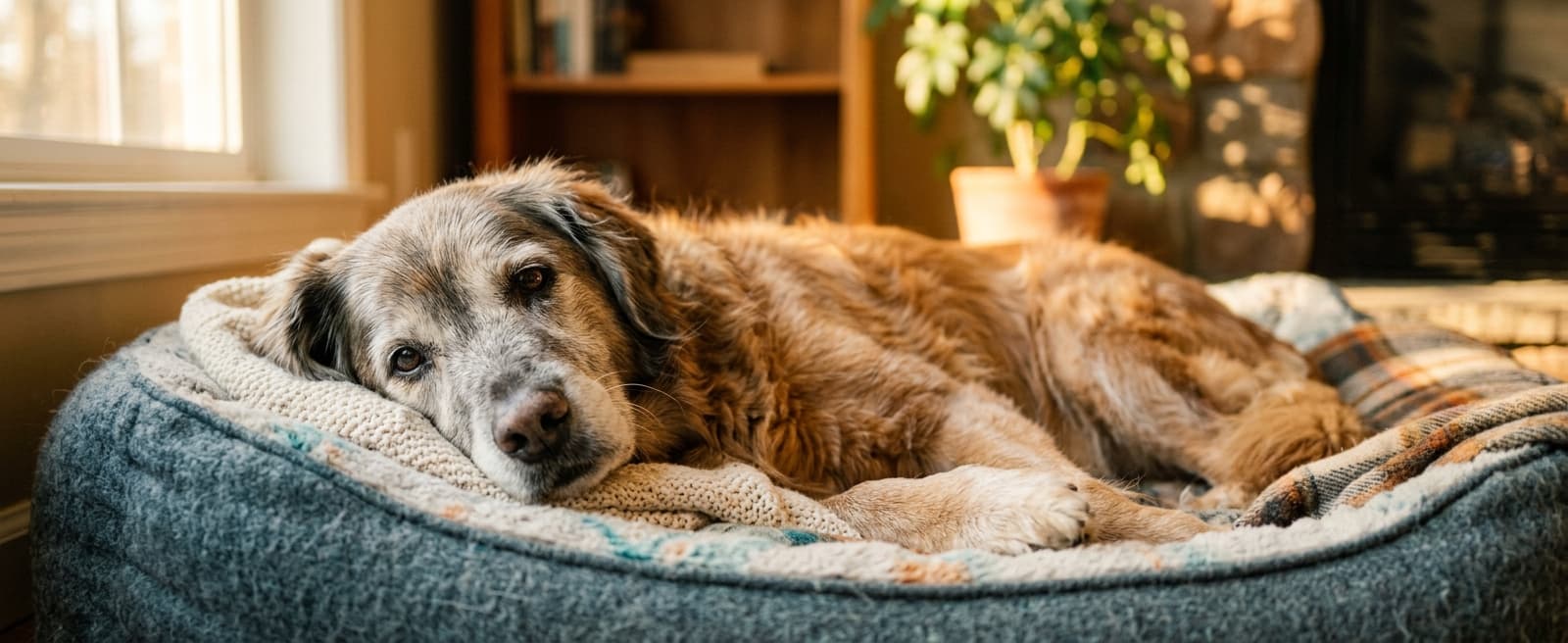
My lab/pit mix Benny turned 9 this year. He's firmly in senior territory. Over the past two years, I've watched him slow down gradually -- stiffer on cold mornings, less interested in long hikes, sleeping a lot more. It's a process you manage, not a problem you fix.
This guide covers everything I've learned from five years at the clinic and from living with an aging dog every day.
Health: What Changes and When to Worry
Normal Aging Signs
These are common and expected. They don't necessarily require veterinary intervention:
- Graying around the muzzle and eyes. Cosmetic only.
- Sleeping more. Senior dogs typically sleep 14 to 16 hours a day.
- Slower pace on walks. They'll still want to go. They just won't sprint.
- Mild stiffness after resting, especially in the morning. This usually improves once they warm up.
- Slight hearing loss. You may notice they don't respond to verbal cues from across the room.
Warning Signs That Need a Vet Visit
These are not normal aging. Get them checked:
- Sudden loss of appetite lasting more than 24 hours
- Dramatic increase in water consumption (possible kidney disease or diabetes)
- New lumps or bumps that grow quickly or change shape
- Difficulty breathing or persistent coughing
- Significant behavior changes (confusion, circling, staring at walls -- these can indicate cognitive dysfunction)
- Inability to get up from a lying position, or collapse during walks
- Blood in urine or stool
The Semi-Annual Vet Visit
Once your dog hits senior age, switch from annual to semi-annual vet visits. Senior-specific bloodwork catches kidney disease, liver issues, thyroid problems, and diabetes early. Early detection is the difference between manageable treatment and emergency intervention. At our clinic, we caught countless issues through routine senior panels that owners had no idea existed.
Nutrition: Feeding an Aging Dog
Senior dogs have different nutritional needs than young adults. Their metabolism slows. They lose muscle mass. Their kidneys work harder. The right food makes a measurable difference.
Key Nutritional Adjustments
- Lower calories, higher protein. Senior dogs need fewer calories to prevent weight gain but more high-quality protein to maintain muscle mass.
- Joint-supporting ingredients. Look for foods with added glucosamine and chondroitin.
- Omega-3 fatty acids. EPA and DHA reduce inflammation and support cognitive function.
- Increased fiber. Older dogs commonly develop constipation. Gentle fiber sources help.
- Adequate hydration. Senior dogs are prone to dehydration. Add water to kibble or incorporate wet food.
Recommended Foods
Purina Pro Plan's Large Breed Adult formula includes glucosamine for joint health and is a solid base diet for larger senior dogs.
Buy Purina Pro Plan Large Breed on Amazon
Blue Buffalo Homestyle Recipe wet food is excellent for seniors who struggle with hard kibble or need extra moisture.
Buy Blue Buffalo Homestyle Recipe on Amazon
Try our free tool: Food Calculator -- calculate your dog's daily calorie needs and portion sizes by breed and weight.
Essential Supplements
Joint supplements are non-negotiable for senior dogs. Benny has been on Cosequin for two years, and his mobility is noticeably better on it than off it.
Nutramax Cosequin Joint Supplement -- The most widely recommended joint supplement by veterinarians. Glucosamine and chondroitin in a soft chew format.
Buy Nutramax Cosequin on Amazon
Nutramax Dasuquin -- Cosequin's stronger sibling for dogs with more advanced joint issues. Includes avocado/soybean unsaponifiables (ASU) for additional cartilage protection.
Buy Nutramax Dasuquin on Amazon
Zesty Paws Wild Alaskan Salmon Oil -- Omega-3s for skin, coat, brain, and joint health. I pump this over Benny's food every morning.
Buy Zesty Paws Salmon Oil on Amazon
Mobility: Keeping Them Comfortable and Moving
Joint stiffness, arthritis, and reduced mobility are the most visible signs of aging. The goal isn't to turn back the clock. It's to keep your dog comfortable and active within their current abilities.
Ramps and Accessibility
The single most impactful change I made for Benny was adding a ramp to the bed. Jumping on and off furniture is brutal on aging joints, and one bad landing can cause serious injury.
PetSafe CozyUp Bed Ramp -- Lightweight, foldable, with a non-slip surface. This transformed Benny's quality of life overnight.
Buy PetSafe CozyUp Bed Ramp on Amazon
Exercise Adjustments
Senior dogs still need exercise. They just need it modified:
- Shorter, more frequent walks instead of one long outing. Three 15-minute walks beat one 45-minute hike.
- Consistent, low-impact terrain. Flat paths, not rocky trails. Avoid steep hills.
- Swimming is excellent if your dog tolerates water. It's zero-impact and builds muscle.
- Warm up before walks. A few minutes of gentle movement before heading out reduces stiffness.
- Watch the weather. Cold and damp conditions make arthritis significantly worse. Use a coat in winter.
Mental Stimulation
Physical limitations make mental enrichment even more important for senior dogs. Puzzle toys and snuffle mats give aging dogs brain work without joint stress.
AWOOF Snuffle Mat -- Low physical effort, high mental reward. Benny uses his daily.
Buy AWOOF Snuffle Mat on Amazon
KONG Wobbler -- Turns mealtime into a slow, engaging activity.
Comfort: The Right Bed and Environment
Orthopedic Beds
A proper orthopedic bed is the best investment you can make for a senior dog. Standard beds flatten out under a heavy dog and provide zero joint support.
Big Barker Orthopedic Dog Bed -- 7 inches of American-made therapeutic foam. This is what Benny sleeps on, and the 10-year guarantee against flattening means it will outlast him. It's expensive, but it's the real deal.
Buy Big Barker Orthopedic Bed on Amazon
Furhaven Orthopedic Dog Bed -- Egg crate foam base with a plush L-shaped design. A solid mid-range option with a removable, washable cover.
Buy Furhaven Orthopedic Bed on Amazon
K&H Heated Dog Bed -- For dogs in cold climates or those with severe arthritis. Uses only 6 watts and warms to body temperature. The heat makes a noticeable difference in how stiff Benny is when he wakes up on winter mornings.
Hydration
Senior dogs need more water than younger dogs, and some will stop walking to their water bowl if it's too far away. Consider adding a second water station.
PetSafe Drinkwell Water Fountain -- The running water encourages drinking. I placed one in the living room and one in the bedroom.
Buy PetSafe Drinkwell Fountain on Amazon
Environmental Adjustments
Small changes to your home environment make a big difference:
- Non-slip rugs or runners on hardwood and tile floors. Slipping is terrifying for dogs with joint issues and can cause injury.
- Night lights in hallways for dogs with declining vision.
- Raised food and water bowls reduce neck strain during meals.
- Keep their bed on the ground floor if stairs have become difficult.
- A consistent routine. Senior dogs, especially those with cognitive decline, find comfort in predictability.
Cognitive Decline (Doggy Dementia)
Building a complete comfort setup for your senior dog? Our Senior Dog Comfort Kit bundles orthopedic beds, supplements, and mobility aids.
Canine Cognitive Dysfunction (CCD) affects a significant percentage of dogs over age 11. It's essentially the dog equivalent of Alzheimer's disease. At the clinic, we used the acronym DISHA to identify symptoms:
- Disorientation -- getting stuck in corners, staring at walls, walking to the wrong side of the door
- Interaction changes -- withdrawal from family, loss of interest in greeting people
- Sleep-wake cycle disruption -- pacing at night, sleeping all day
- Housetraining regression -- accidents from a previously reliable dog
- Activity changes -- repetitive behaviors, restlessness, or extreme lethargy
If you notice multiple DISHA symptoms, talk to your vet. There are medications and dietary interventions that can slow progression, especially when caught early.
When Quality of Life Becomes the Question
This is the hardest part. There is no avoiding it. At some point with every senior dog, you'll start asking whether they're still having more good days than bad.
Veterinarians often use quality-of-life scales that evaluate:
- Pain management -- Is their pain controlled effectively?
- Appetite -- Are they still interested in food?
- Hydration -- Are they drinking enough?
- Hygiene -- Can they keep themselves clean, or do they need constant help?
- Happiness -- Do they still engage with the family? Do their eyes light up?
- Mobility -- Can they get to their food, water, and outside to go to the bathroom?
When bad days consistently outnumber good days, it's time for an honest conversation with your vet. Making that decision from a place of love, based on your dog's experience rather than your own grief, is the final act of responsible ownership.
Final Thoughts
Senior dog care isn't about fighting aging. It's about managing the process with dignity and comfort. The right food, appropriate supplements, a good bed, modified exercise, and regular vet visits can give your senior dog months or years of comfortable, happy living.
Benny is slower than he used to be. He can't do the 10-mile hikes we used to tackle together. But he still loves his snuffle mat, still wags at the door when I come home, and still curls up next to me every evening. The goal is to protect those moments for as long as possible.
Related Reading
- Best Dog Beds for Large Breeds -- Orthopedic options for big senior dogs
- Best Dog Supplements 2026 -- Joint, skin, and cognitive support
- Best Dog Strollers -- When walks become too difficult