
Spring Means Allergies — For Dogs Too
When I worked at the clinic in Portland, our appointment book exploded every April. Humans get watery eyes and sneeze. Dogs turn into relentless scratching and paw-licking machines.
If your dog spends all of May gnawing at their feet, environmental allergens are likely the cause. I've managed seasonal flare-ups for years with Benny, my 9-year-old lab/pit mix. Figuring out those triggers takes a little detective work. Managing them saves both of you a ton of misery.
Common Spring Allergens for Dogs
The usual suspects in spring include:
- Tree pollen: Oak, birch, cedar, and pine are the worst offenders. Pollen counts peak in early to mid-spring.
- Grass pollen: Bermuda, ryegrass, and fescue release pollen as lawns wake up. (This is Maple's favorite thing to roll in, unfortunately).
- Mold spores: Spring rain and warming temperatures create perfect conditions for mold. It grows rapidly in soil, mulch, and decaying leaves.
- Dust mites: These pests are present year-round. However, their activity ramps up in spring as humidity increases.
- Weed pollen: Some weeds begin pollinating in late spring. This overlaps with tree and grass seasons.
Symptoms to Watch For
Here's the thing: dogs process allergies differently than we do. Most vets I know will tell you to look at the skin first. Here's what I looked for in the exam room:
Skin-Related Symptoms
- Intense scratching, especially around the face, ears, armpits, and groin.
- Red, inflamed skin. (Look for pinkness on the belly and between the toes).
- Excessive paw licking or chewing. That rust-colored staining on light-colored paws is a telltale sign.
- Hot spots. These moist, red, painful patches really do seem to appear overnight.
- Hair loss in patches from repeated scratching or licking.
- Recurrent ear infections with dark, waxy discharge. (Trust me, I've cleaned enough ears to spot an allergy case instantly).
Respiratory Symptoms
- Sneezing. It's less common in dogs than humans, but it happens.
- Runny nose or eyes.
- Reverse sneezing. This sudden, repeated inhalation sounds terrifying. It's usually harmless.
Digestive Symptoms
- Occasional vomiting or diarrhea linked to seasonal patterns. This is less common with environmental allergies and more typical of food allergies.
Home Remedies and Management
Before reaching for medications, I always try management strategies first.
Reduce Allergen Exposure
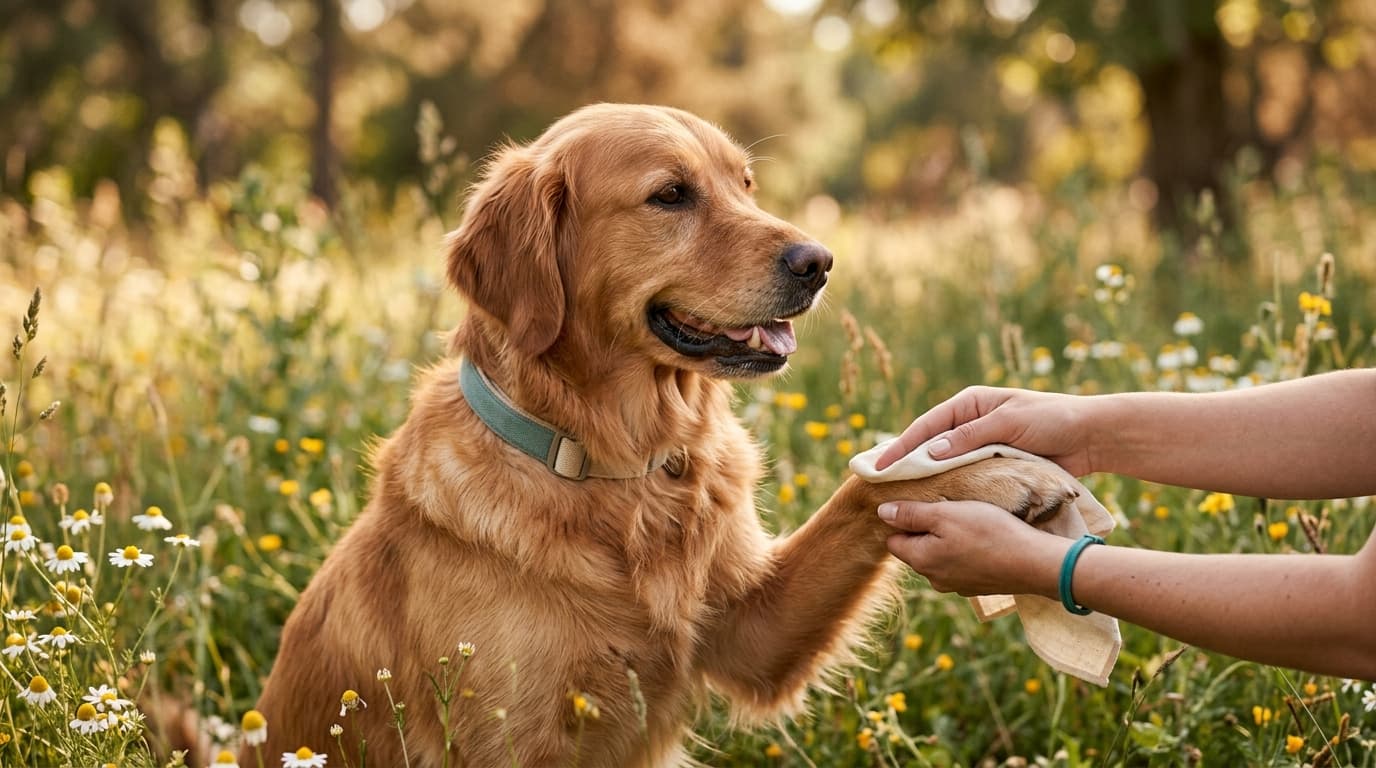
- Wipe your dog down after every outdoor walk. I use a damp cloth or hypoallergenic pet wipe on paws, the belly, and the face. What sealed it for me was wiping Benny's paws with a white towel and seeing all the yellow dust.
- Bathe regularly using a gentle, oatmeal-based or medicated shampoo. During peak season, weekly baths make a massive difference. Just avoid harsh shampoos that strip natural oils.
- Wash bedding weekly in hot water. Your dog's bed collects pollen, dust, and dander. It's extra laundry, but it's worth it.
- Keep windows closed during high pollen days. Run the air conditioner with a HEPA filter instead.
- Limit outdoor time during peak pollen hours. These are typically early morning and late afternoon.
- Vacuum frequently using a vacuum with a HEPA filter. Pay special attention to areas where your dog sleeps.
Soothing Topical Treatments
- Colloidal oatmeal baths soothe inflamed skin. They provide great temporary itch relief.
- Coconut oil applied to dry, irritated skin moisturizes and reduces itching. Use virgin, unrefined coconut oil.
- Apple cider vinegar spray (diluted 50/50 with water) helps with itchy paws. Never apply this to broken skin. (I learned that the hard way).
- Cool compresses on hot spots reduce inflammation. They provide immediate relief.
Dietary Support
- Omega-3 fatty acids from fish oil reduce inflammatory responses in the skin. Look for a supplement with EPA and DHA specifically derived from fish. Check with your vet for proper dosing.
- Probiotics support immune system regulation. Research is still emerging here. However, many veterinary dermatologists recommend them as part of a long-term allergy plan.
Over-the-Counter Solutions
For mild to moderate allergies, a basic OTC antihistamine holds up well:
- Benadryl (diphenhydramine): The standard dosing is 1 mg per pound of body weight, given two to three times daily. Always confirm with your vet first. Never use formulations containing xylitol or pseudoephedrine.
- Zyrtec (cetirizine): Generally dosed at 10 mg once daily for dogs over 10 pounds. It's less sedating than Benadryl. Again, confirm with your vet.
- Chlorpheniramine: Sometimes effective for dogs who don't respond to other antihistamines. It requires veterinary guidance for dosing.
Important: Antihistamines work best when given preventatively. Don't wait until symptoms have already flared. If you know spring is your dog's worst season, start antihistamines two weeks before pollen season typically begins.
Try our free tool: Medication Dosage Calculator -- calculate safe Benadryl and other OTC allergy medication doses for your dog.
When to See the Veterinarian
Home management isn't always enough. I see severe, neglected allergies constantly while volunteering at the Multnomah County Animal Shelter. Trust me, you don't want to let the inflammation go unchecked. I book an appointment if:
- Your dog scratches so intensely they create open wounds or hot spots.
- Ear infections keep recurring despite regular cleaning.
- Over-the-counter antihistamines provide zero relief.
- You notice secondary skin infections. Crusty, oozing, or foul-smelling skin needs a professional.
- Your dog's quality of life takes a hit. Poor sleep, loss of appetite, and behavior changes are big red flags.
Prescription Options Your Vet May Recommend
- Apoquel (oclacitinib): A targeted anti-itch medication that works within hours. It blocks specific itch pathways without the broad side effects of steroids.
- Cytopoint: An injectable antibody treatment. It neutralizes the protein responsible for sending itch signals. A single injection provides relief for four to eight weeks.
- Short-term steroids (prednisone): Extremely effective at stopping an itch. The honest downside is the side effects—primarily excessive drinking and peeing. I'd skip this if you have other options.
- Medicated shampoos and sprays: Prescription-strength formulations with chlorhexidine or ketoconazole. They knock out secondary bacterial or yeast infections.
Allergy Testing
If your dog's allergies are severe or year-round, allergy testing identifies the specific triggers.
Intradermal Skin Testing
This is considered the gold standard. A veterinary dermatologist injects tiny amounts of common allergens under the skin and watches the reaction. It requires sedation. The results guide immunotherapy (allergy shots) to desensitize your dog.
Blood Testing (Serum Allergy Testing)
This is less invasive than skin testing. A blood sample goes to a lab to measure antibody responses to various allergens. While convenient, the trade-off is a higher rate of false positives. I often drew blood for this at the clinic as a starting point when skin testing wasn't an option.
What Testing Tells You
Allergy testing doesn't diagnose allergies. Your dog's symptoms do that. Testing simply identifies the specific triggers, which allows for targeted immunotherapy. Most owners notice a massive reduction in symptoms six months in.
Creating a Spring Allergy Action Plan
Managing seasonal skin issues alongside grooming? Our Dog Grooming at Home Kit includes medicated shampoos and skin care tools.
- Track patterns: Note when symptoms start and worsen each year. This helps you anticipate the flare-ups.
- Start preventative care early: Begin wiping down paws, increasing baths, and starting antihistamines before peak season.
- Address flare-ups quickly: The longer you let inflammation go unchecked, the harder it is to control.
- Work with your vet: Develop a multi-pronged approach. Combine environmental management, medications, and potentially immunotherapy.
Final Thoughts
Spring allergies in dogs are manageable, but they're rarely curable. I've been managing Benny's hip dysplasia and allergies simultaneously for years. The goal isn't total elimination. It's effective management that keeps your dog comfortable and prevents secondary infections. Start with environmental controls and add OTC antihistamines if needed. Don't hesitate to call your vet when home measures fall short. Your dog shouldn't have to spend every spring miserable.
Related Reading
- Spring Dog Safety Tips -- Eight more seasonal hazards to watch for
- Best Dog Supplements 2026 -- Omega-3 supplements for skin health
- Dog Health Checklist -- Seasonal health monitoring