
Traveling With Your Dog Doesn't Have to Be Stressful
Here's the thing about traveling with dogs: preparation is everything. If your dog barely leaves the house, a ten-hour road trip is going to be miserable. I've taken my dogs all over the Pacific Northwest. Benny, my 9-year-old lab/pit mix, is a seasoned road-tripper. Maple, my 2-year-old Australian shepherd, required six months of counter-conditioning before she could handle a hotel stay without barking.
With the right gear and a solid plan, most dogs can become reliable travel companions. I'm breaking down the three main scenarios: car trips, flights, and hotel stays.
Part 1: Car Travel
Safety First: Restraint Options
When I worked at the Portland clinic, we saw the aftermath of unsecured dogs in car accidents. It's brutal. An unrestrained 60-pound dog in a 35-mph collision becomes a 2,700-pound projectile. Beyond crash safety, loose dogs distract you or step on pedals. Restraining your dog isn't optional.
Crash-tested crates: This is the safest route. You want crates independently tested by the Center for Pet Safety (CPS). Brands like Gunner Kennels and Variocage pass CPS testing. After logging 14 different travel crates in my testing spreadsheet, I use a Gunner G1 for Maple in the cargo area of my SUV. It's massively bulky, but what sealed it for me is the peace of mind.
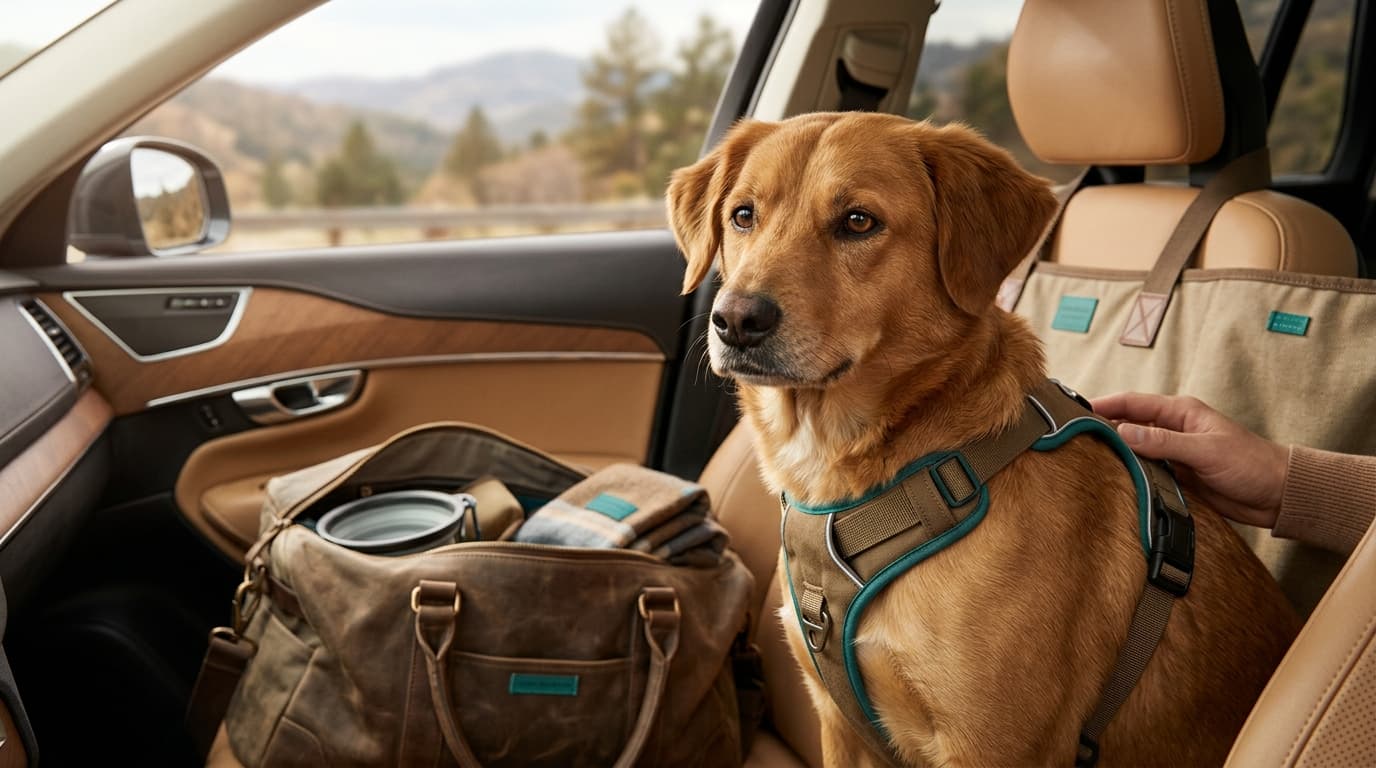
Crash-tested harnesses: I'd skip this if you have the space for a crate, but a crash-tested harness attached to your vehicle's seat belt is the next best option. I tested the Ruffwear Load Up, but the Sleepypod Clickit Sport Plus is one of the few that actually passes CPS testing. Benny wears one in the back seat since his hip dysplasia makes climbing into high crates difficult.
Seat covers with restraint anchors: These protect your upholstery (a necessity with Maple's shedding). They aren't safety devices on their own. They work well in combination with a tested harness.
Managing Car Sickness
Car sickness is highly common, especially in puppies. If your dog is drooling heavily, licking their lips, whining, or pacing, they're probably nauseous.
Prevention strategies:
- Face your dog forward. Crates positioned so the dog sees out the windshield drastically reduce nausea.
- Keep the car cool. Crack a window slightly for fresh air.
- Withhold food for two to three hours before you drive.
- Take breaks every hour or two for short walks.
- Start with five-minute drives. Build up the distance over three weeks.
- Keep rides positive. Drive to the park, not just the vet.
If motion sickness persists: Most vets I know recommend Cerenia (maropitant). It's a prescription anti-nausea medication specifically approved for dogs. We prescribed it constantly at the clinic. It holds up well on long trips and doesn't make them overly drowsy.
Road Trip Essentials Checklist
- Current ID tags and a microchip (double-check your contact info).
- Leash and collar or harness.
- Portable water bottle and travel bowl.
- Poop bags.
- Food portioned for the trip, plus an extra three days' worth.
- Any medications your dog takes.
- First aid kit (gauze, hydrogen peroxide for poison control only under vet direction, tick remover, styptic powder).
- A familiar blanket or bed.
- Crate or crash-tested harness.
- A recent photo of your dog on your phone.
- Vaccination records.
Try our free tool: Travel Packing List -- generate a customized checklist for your next trip with your dog.
Part 2: Air Travel
Cabin vs. Cargo
Here's the honest downside to flying with dogs: it's rarely fun for them.
In-cabin travel is restricted to dogs who fit in a carrier under the seat in front of you. That usually means dogs under 20 pounds, carrier included. The carrier must be airline-approved. It needs ventilation on at least two sides, and your dog has to be able to stand, turn around, and lie down.
Cargo travel is the only option for larger dogs like Benny. They fly in a pressurized, temperature-controlled hold in a hard-sided crate. Statistically, it's safe. Realistically, it involves loud noises, temperature swings, and a lot of stress.
Airline Rules to Know
Rules vary by airline, but these apply almost universally:
- Booking: You have to call to book a pet reservation in advance. Most flights cap the number of in-cabin dogs.
- Fees: Expect to pay $75 to $200 each way for the cabin. Cargo fees run $200 to $500+, depending on size.
- Breed restrictions: Brachycephalic (flat-faced) breeds like Pugs and Bulldogs are banned from cargo on most airlines. The respiratory risk at altitude is just too high.
- Temperature embargoes: Airlines won't fly dogs in cargo if ground temps at any stop are below 45°F or above 85°F.
- Age minimum: Puppies must be at least eight weeks old.
- Health certificate: You'll need a USDA-accredited vet certificate, usually issued within 10 days of the flight.
Making Air Travel Less Stressful
- Practice with the carrier for at least three weeks before the flight. Feed meals inside it. Take short car rides with it.
- Exercise your dog hard before heading to the airport. I usually take Maple for a long trail run beforehand.
- Arrive early. Rushing just adds to the tension.
- For cargo, freeze water in a bowl attached to the crate door. Your dog can lick the ice to hydrate without the water spilling during loading.
- Don't sedate your dog unless your vet specifically tells you to. Sedation impairs their balance and ability to regulate body temperature. We saw too many close calls with sedated dogs in cargo.
- Book direct flights. Skipping the layover removes half the handling stress.
Part 3: Hotel Stays
Finding Pet-Friendly Hotels
Not all "pet-friendly" hotels actually like dogs. Some technically allow them but charge massive fees, stick you in a dingy room, and complain if your dog breathes too loudly.
Hotel chains with strong pet policies:
- La Quinta by Wyndham: No pet fees at most locations. Two dogs per room. This is my go-to for road trips.
- Kimpton Hotels: Zero fees, no size limits, no breed restrictions. If Benny and I need a nicer stay, this is where we go.
- Red Roof Inn: One dog per room. No extra fees at most spots.
- Best Western: Varies by location, but many charge a reasonable $20 to $50 per night.
- Motel 6: Pets stay free mostly. Great for budget travel.
Hotel Etiquette With Your Dog
Following these rules ensures hotels don't start banning dogs altogether:
- Never leave your dog alone in the room if they bark. Other guests didn't pay to listen to your dog panic.
- Bring a crate. I always crate Maple in hotels. It stops her from destroying hotel furniture (she's a power chewer) and gives her a safe space.
- Cover the bed. If your dog sleeps with you, bring your own sheet to cover the hotel bedding.
- Clean up immediately. This means inside accidents and outside potty breaks.
- Keep them leashed in the lobby, hallways, and parking lots.
- Tell housekeeping. Let the front desk know a dog is in the room.
- Tip extra. I always leave a larger tip when traveling with the dogs. Dog hair is inevitable.
What to Pack for Hotel Stays
Add these to your road trip list:
- A portable crate or travel bed.
- An old towel for muddy paws. (Volunteering at the Multnomah County Animal Shelter taught me that wet wipes aren't enough for real mud).
- A portable white noise machine. This masks hallway sounds that trigger barking.
- Chew toys or stuffed Kongs. (I bring the black extreme Kongs for Maple).
- A nightlight.
- Floor cleaner wipes.
Health Certificates and Documentation
Domestic Travel
Most airlines require a health certificate from a USDA-accredited vet, issued within 10 days of your flight. Even if I'm just driving to Seattle, I bring Benny and Maple's vaccination records. You never know when you'll need an emergency vet out of state.
International Travel
Taking a dog out of the country is a massive logistical headache. At minimum, expect to need:
- An ISO-compliant microchip.
- A current rabies vaccine (with titer testing documentation for some countries).
- A USDA-endorsed health certificate.
- Import permits.
- Quarantine periods (Australia, Hawaii, Japan, and the UK have notoriously strict protocols).
Start your research six months out. The USDA APHIS website is your best resource here.
Dogs Who Shouldn't Travel
Packing for a road trip? Our Dog Car Travel Kit bundles crash-tested restraints with travel bowls, portable water, and comfort essentials.
Be honest about what your dog can handle. Sometimes leaving them behind is the kinder option.
- Brachycephalic breeds: The airway risks during flights just aren't worth it.
- Senior dogs with health issues: Benny's hips can't handle long flights anymore, so he stays home with a trusted sitter.
- Dogs with severe anxiety: If counter-conditioning and vet-prescribed meds don't help, don't force it.
- Aggressive or reactive dogs: Unpredictable environments are a huge liability.
For these dogs, finding a great local pet sitter is worth the expense.
Final Thoughts
Traveling with your dog takes work. It requires actual planning, investing in decent gear, and looking objectively at your dog's temperament. Start small. Take a weekend trip two towns over before attempting a cross-country haul.
Prioritize their safety over your convenience. It's a lot of effort upfront. But having your dog beside you on the road is absolutely worth it.
Related Reading
- Best Dog Car Seats 2026 -- Crash-tested restraint reviews
- Best Dog Carriers for Small Dogs -- Airline-compliant carrier options
- Best Portable Dog Water Bottles -- Hydration for the road