
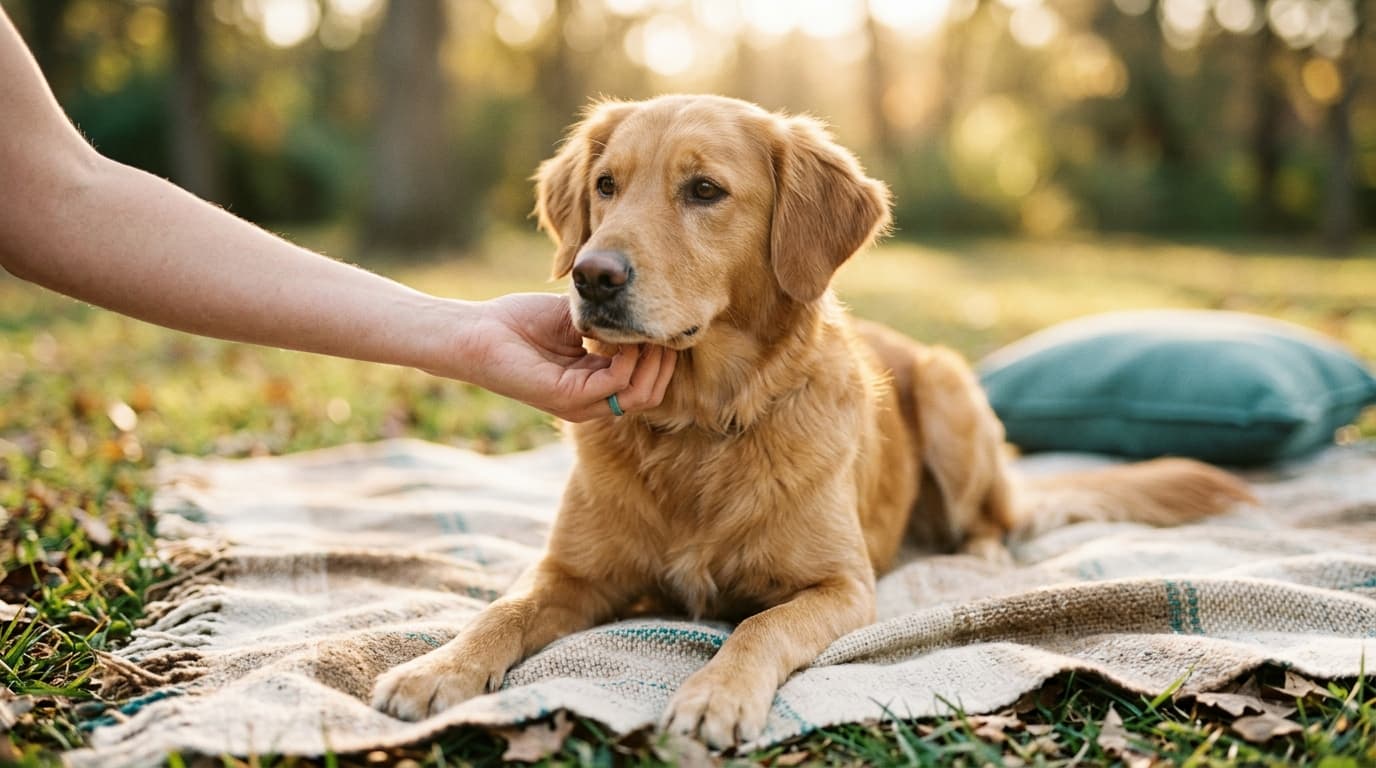
Your Dog Is Always Talking
Dogs communicate constantly through body language. The problem is, most people miss the signals entirely. A wagging tail doesn't always mean happy. A yawn isn't always a sign of fatigue. And showing a belly? That's rarely a request for rubs.
Learning to read canine body language is the single most valuable skill you can develop. It helps you catch stress early. It prevents bite incidents. What sealed it for me was my time at the clinic in Portland. I saw daily how misreading a dog escalated bad situations. Genuine two-way communication changes everything.
Tail Positions and What They Mean
The tail is highly expressive. It's also the most misread.
High and Stiff
A tail held high and rigid means arousal and alertness. (Add a slow, stiff wag to the mix, and you've got a dog on edge.) This isn't inherently friendly. It signals confidence, but it can also be a warning. Context matters. A stiff tail pointed at an unfamiliar dog is very different from greeting you at the door.
Neutral Position (Breed-Dependent)
A relaxed tail at its natural resting spot means a calm dog. Keep in mind that "natural" varies wildly by breed. A Greyhound's neutral tail is tucked low. A Husky's tail curls over its back. My 9-year-old lab/pit mix, Benny, keeps his straight out and slightly down when he's totally relaxed.
Low or Tucked
A low or tucked tail screams fear, anxiety, or submission. If you see this paired with other stress signals, your dog needs a break. I see this constantly when I volunteer monthly at the Multnomah County Animal Shelter. The honest downside of a shelter environment is the constant pressure. Tucked tails are everywhere.
Broad, Loose Wag
This is the wag everyone thinks means "happy." They're usually right. A loose, whole-body wag is genuine positive emotion. The key here is looseness. The body should look fluid, not stiff.
Slow Wag (Mid-Height)
A slow wag at medium height usually means uncertainty. Your dog's assessing the situation. They haven't decided how they feel yet. It's essentially a "wait and see" signal.
Ear Positions
Forward and Erect
Ears pushed forward show intense focus. Your dog's locked onto something. It could be a sound, a squirrel, or another dog. This is just alertness. It isn't necessarily aggression.
Relaxed and Neutral
Ears sitting in their natural position mean your dog's calm. You need to learn this baseline for your specific dog. It usually takes me about two weeks of solid observation with a new shelter transfer to figure theirs out.
Pinned Back Flat
Ears flattened tight against the head signal fear, submission, or extreme stress. Sometimes, it can mean affection during a greeting. (Benny does this when I come home from a long shift.) You've got to read the rest of the body to know for sure.
One Ear Up, One Ear Down
This classic look signals curiosity or mild confusion. Your dog's processing something weird. It isn't generally anything to worry about.
Eye Signals
Soft Eyes
Relaxed, slightly squinty eyes with a normal blink rate indicate a comfortable dog. This is the goal.
Hard Stare
A fixed, unblinking stare is a clear warning. The eyes are wide, and the facial muscles are tense. During my five years at the clinic, we saw this right before a dog snapped. Don't challenge a hard stare. Calmly redirect your dog's attention instead.
Whale Eye (Half-Moon Eye)
"Whale eye" happens when a dog turns their head away but keeps their eyes locked on something. You'll see a white crescent around the iris. It signals intense discomfort or fear. Dogs do this when guarding high-value items. They also do it when someone's standing too close.
Averted Gaze
Looking away deliberately is a de-escalation tactic. If your dog turns their head during an interaction, they're trying to communicate. They're saying they aren't a threat. They might just want some space.
Mouth and Lip Signals
Relaxed Open Mouth
A loose, open mouth with a visible tongue is a dog smile. The jaw's soft. The lips are relaxed. There's zero tension.
Lip Licking (Out of Context)
Licking lips when there's no food around is a huge stress signal. It's a very common calming behavior. It's often the first clue a dog's uncomfortable.
Showing Teeth (Snarl)
Lips pulled back to expose teeth is an unambiguous warning. Add a wrinkled muzzle, and the message is clear. The dog's telling you to back off. Respect it immediately.
Yawning (Out of Context)
Dogs yawn when they're tired. They also yawn when they're stressed. If your dog yawns repeatedly at the vet or around strange dogs, they're anxious.
Panting (Without Physical Exertion)
Heavy panting without exercise in moderate temperatures points to stress. This is often paired with pacing or an averted gaze.
Body Posture
Play Bow
Front legs extended, chest low, rear end up in the air. This is an invitation to play. Dogs use it to initiate fun. My 2-year-old Australian shepherd, Maple, does this constantly to tell me her roughhousing is all a game. (She destroys everything not rated for power chewers, so I appreciate the warning.)
Weight Forward
A dog leaning forward onto their front legs is showing confidence. If the body's stiff and the eyes are hard, it's a threat. If the body's loose, it's just intense interest.
Weight Shifted Back
Leaning away or shifting weight to the back legs means they want distance. The dog's uncomfortable. They're prepping to retreat.
Shaking Off (Without Being Wet)
A full-body shake when dry is a stress-release valve. Dogs do this after tense encounters. You'll see it after vet exams or weird dog greetings. They're physically shaking off the adrenaline.
Freezing
A dog that suddenly goes completely still is on high alert. No moving, no blinking, total muscle tension. This freeze usually precedes flight or a bite. It's incredibly easy to miss. If your dog freezes, get them out of there calmly.
Calming Signals
Calming signals are subtle behaviors dogs use to diffuse tension. Norwegian dog trainer Turid Rugaas identified over 30 of them. Here are the most common:
- Turning the head away – "I mean no harm"
- Turning the entire body sideways – "I'm not confronting you"
- Lip licking – "I'm feeling some stress"
- Yawning – "This situation's making me uncomfortable"
- Sniffing the ground – "I'm choosing to disengage"
- Moving slowly or in a curve – "I'm approaching non-threateningly"
- Sitting or lying down – "I'm no threat"
When you see these, your dog's actively communicating. Don't punish these signals. Never force your dog to stay in a situation they're trying to exit. I'd skip this if you think "exposure therapy" works for stressed dogs—it usually just causes a bite. Compared to flooding a dog with stress, letting them choose to walk away builds actual confidence.
Play vs. Aggression: How to Tell the Difference
This is where almost every owner struggles. Maple plays like a total maniac, which can look terrifying to the untrained eye. Here's the thing about healthy play versus aggression.
Healthy play looks like:
- Bouncy, exaggerated movements
- Play bows before and during play
- Role reversals (one dog chases, then they switch)
- Self-handicapping (A bigger dog gentles their play for a smaller one. Benny does this perfectly despite his hip dysplasia.)
- Brief pauses and check-ins
- Loose, wiggly body language
Aggression or problematic play looks like:
- Stiff, rigid body posture
- Sustained pinning without release
- One dog repeatedly trying to escape
- Hard stares and closed mouths
- No role reversals
- Escalating intensity without pauses
If you're unsure, call your dog away briefly. If both dogs try to re-engage with loose bodies, the play holds up. If one dog looks relieved, the interaction wasn't mutual.
The Bottom Line
Using body language skills during training? Our Dog Training Toolkit pairs training guides with treat pouches and positive reinforcement tools.
Reading dog body language isn't about memorizing a chart. It's about learning your dog's specific baseline. Every dog has their own personality. The signals above provide a solid framework. But the best interpreter's always the person holding the leash. Pay attention to the small details. It's totally worth it. Your dog's been talking to you all along.
Related Reading
- How to Socialize Your Puppy -- Reading body language during socialization
- Dog Park Etiquette -- Body language signals to watch at the park
- Dog Separation Anxiety Guide -- Recognizing anxiety signals