
Affiliate Disclosure: This post contains Amazon affiliate links. I earn a small commission at no extra cost to you.
Why Your Dog Needs Winter Boots
I spent five years as a vet tech at a mixed-practice clinic in Portland. The first major snowstorm always brought in a wave of limping dogs. People rarely think about paw protection until the damage is already done.
Here's what winter actually does to unprotected paws:
- Road salt and chemical deicers cause chemical burns, cracking, and severe irritation. If a dog licks salt off their paws, it often triggers gastrointestinal upset and sodium toxicity.
- Snow and ice pack tightly between the toes and paw pads. They form painful ice balls that rip at the fur and skin.
- Cold pavement leads to frostbite on paw pads during long walks. (I saw this constantly in small breeds and dogs with thin coats).
- Ice and slippery surfaces cause slips that tear ligaments. For my 9-year-old lab/pit mix Benny, who has hip dysplasia, a slip on the ice is a guaranteed disaster.
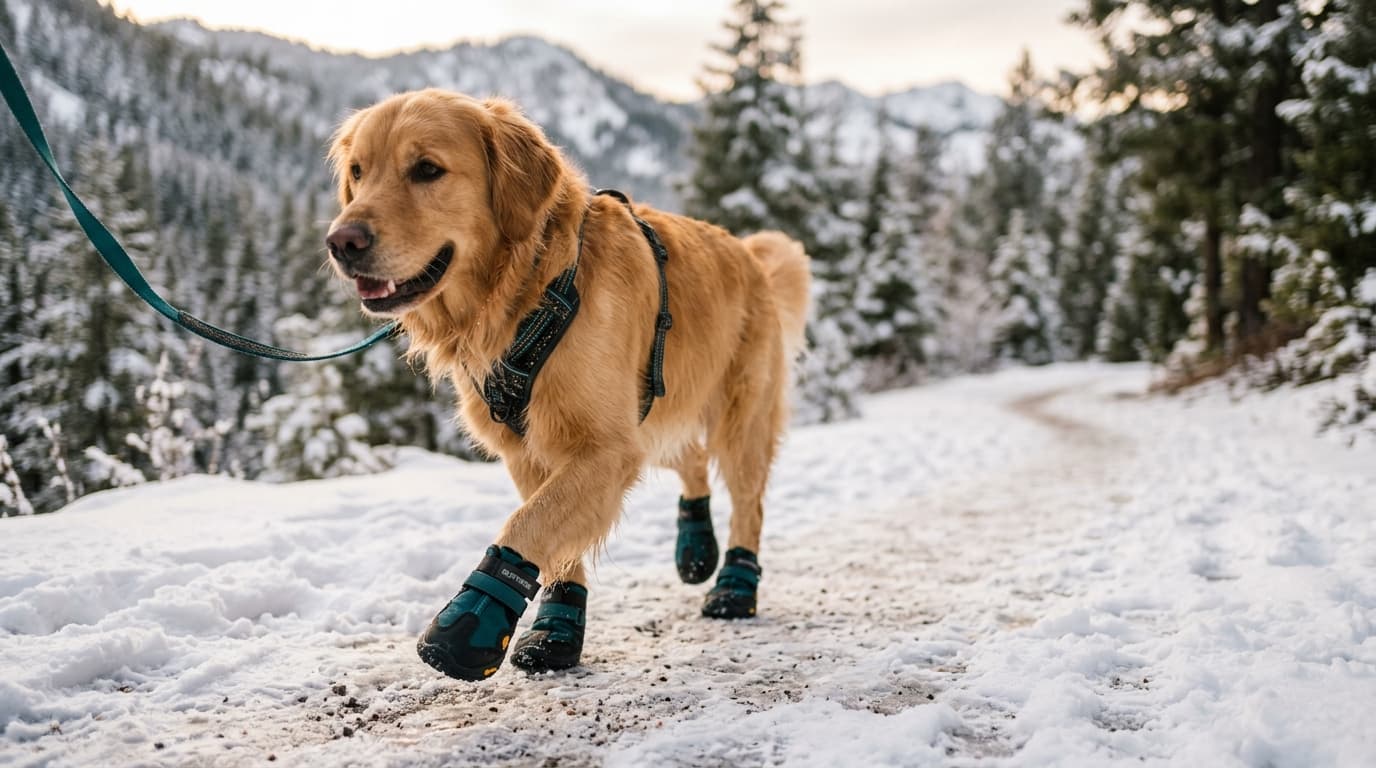
Winter boots solve all four of these problems. The trick is finding boots that don't immediately launch off your dog's foot into a snowbank.
What Makes a Good Winter Dog Boot
- Secure fastening system -- Look for sturdy Velcro straps, drawstrings, or zippers.
- Rubber or waterproof sole -- It has to keep moisture out while gripping the ice.
- Insulation -- Fleece or neoprene lining adds warmth without awkward bulk.
- Proper sizing -- Too loose and they fly off. Too tight and they cut off circulation.
- Reflective elements -- Winter walks usually happen in the dark.
My Top 5 Winter Dog Boots
1. QUMY Dog Boots Waterproof (Best Overall)
I keep a spreadsheet of over 600 dog products I've tested since 2019. The QUMY boots have easily earned their spot as my most reliable daily driver. What sealed it for me was the wide split-seam opening. You don't have to wrestle your dog's foot into a tiny tube.
Pros:
- Wide opening makes them painless to put on.
- Adjustable velcro strap stays locked down.
- Rugged, anti-slip rubber sole holds up on ice.
- Waterproof construction.
- Reflective strap adds visibility.
- Highly affordable.
Cons:
- Sizing runs slightly large. (Consider sizing down).
- No internal insulation.
- Velcro loses its grip after heavy washing.
Best for: Everyday winter walks, salt protection, and moderate cold conditions.
2. Ruffwear Grip Trex (Best Premium)
Here's the thing about Ruffwear. They make outdoor dog gear that rivals premium human equipment, and the Grip Trex is no exception. I bought these for Maple, my 2-year-old Australian shepherd. She runs hard and destroys flimsy gear. Six months in, these boots haven't dropped a single stitch.
Buy Ruffwear Grip Trex on Amazon
Pros:
- Vibram outsole offers the best traction on the market.
- Bulletproof construction.
- Very secure hook-and-loop closure.
- Breathable mesh upper prevents sweaty paws.
- Available in half sizes.
Cons:
- They're expensive. (But totally worth it for the Vibram).
- Zero insulation.
- The stiff sole requires a longer break-in period.
Best for: Icy trails, heavy hiking, active outdoor dogs, and power chewers who tear up cheaper gear.
3. Ultra Paws Durable Dog Boots (Best for Staying On)
The biggest complaint I hear about dog boots is that they fall off. Ultra Paws fixed this with a clever foam-padded interior that molds to the paw. It also uses a wrap-around strap system. After two weeks of testing these on squirmy dogs at the Multnomah County Animal Shelter, I can confirm they stay on better than anything else.
Buy Ultra Paws Durable Boots on Amazon
Pros:
- Best-in-class retention. (They actually stay put).
- Foam interior comfortably grips the leg.
- Water-resistant shell.
- Skid-resistant sole.
- Easy to wipe clean.
Cons:
- Not fully waterproof in deep puddles.
- Minimal insulation.
- The honest downside is their limited size range.
Best for: Dogs that kick off every other boot, and senior dogs who need reliable traction indoors and out.
4. Ruffwear Grip Trex Dog Boots (Best for Rugged Terrain)
When you need boots that handle both cold and rough ground, the Grip Trex delivers. The Vibram outsole (the same rubber compound used in premium hiking boots) provides exceptional traction on ice, rock, and wet surfaces. The breathable mesh upper keeps paws comfortable across a wide temperature range, and the hook-and-loop closure stays locked in place during long hikes.
Buy Ruffwear Grip Trex Boots on Amazon
Pros:
- Vibram outsole grips ice, rock, and wet surfaces.
- Breathable mesh upper works across seasons.
- Secure hook-and-loop closure stays put.
- Available in a wide range of sizes.
- Durable construction that lasts multiple seasons.
Cons:
- Premium price tag.
- Less insulation than dedicated winter-only boots.
- Sizing can be tricky between half sizes.
Best for: Hiking in cold, rocky, or icy terrain. Dogs that need year-round paw protection, not just winter warmth.
5. PAWZ Waterproof Dog Boots (Best Disposable Option)
These look ridiculous. They're basically thick rubber balloons. But PAWZ takes a brilliant approach to paw protection. They form a waterproof barrier against salt and chemicals without the clunky weight of a traditional boot. Dogs that flat-out refuse to walk in standard boots will usually tolerate PAWZ. They can still feel the ground.
Buy PAWZ Rubber Dog Boots on Amazon
Pros:
- Unmatched tolerance from picky dogs.
- Complete waterproof seal against salt.
- Weightless design.
- Preserves natural ground feel.
- Cheap enough to replace frequently.
Cons:
- Absolutely no insulation.
- Zero traction benefit on ice.
- Rough concrete tears them up.
- Sizing can be tricky. (Too tight restricts blood flow).
Best for: Salt-sensitive paws, dogs that hate bulky boots, and quick urban bathroom breaks.
How to Size Dog Boots Correctly
When I worked at the clinic, incorrect sizing was the leading cause of boot-related frustration. Follow these exact steps:
- Have your dog stand on a piece of paper. Don't lift the paw. You need the natural, weight-bearing spread of the foot.
- Mark the front of the longest toenail and the back of the paw pad.
- Measure the width at the widest point.
- Take the larger measurement (length or width) and check the brand's size chart.
- When between sizes, size up for stiff boots like Ruffwear. Size down for flexible boots like QUMY or PAWZ.
- Measure the front and back paws separately. Many dogs have noticeably larger front paws. (Benny wears a size larger on his front feet).
Getting Your Dog Used to Boots
Building a complete cold-weather kit? Our Dog Winter Weather Kit pairs boots with insulated coats and paw protection.
Your dog will walk like a show pony at first. It's totally normal. Here's how to ease the transition without traumatizing them:
- Let them sniff the boots on the floor first.
- Put on just the front two boots. Reward heavily with high-value treats.
- Walk around the living room. Keep it short.
- Add the back boots once they stop high-stepping in the front ones.
- Take a quick five-minute outdoor walk.
- Gradually increase the time. Most dogs figure it out after three or four sessions.
The Bottom Line
For most of us dealing with standard winter weather, QUMY Dog Boots hit the sweet spot of protection, ease, and price. If you hike hard or navigate slick ice, the Vibram soles on the Ruffwear Grip Trex make them entirely worth the investment.
For frigid, sub-zero temperatures, Muttluks are the clear winner. And if your dog acts paralyzed the second you strap a boot to their foot, grab a pack of PAWZ. They offer a brilliant, low-bulk barrier against street salt.
Your dog's paws contact the frozen ground all winter long. Protecting them isn't an extra luxury—it's just part of the job.
Related Reading
- Best Dog Winter Coats -- Tested in sub-zero temperatures
- Best Dog Hiking Gear -- Trail-tested paw protection and more
- Best Dog Harnesses 2026 -- Pair with boots for winter walks