
Affiliate Disclosure: This post contains Amazon affiliate links. I earn a small commission at no extra cost to you.
Why Puzzle Toys Matter
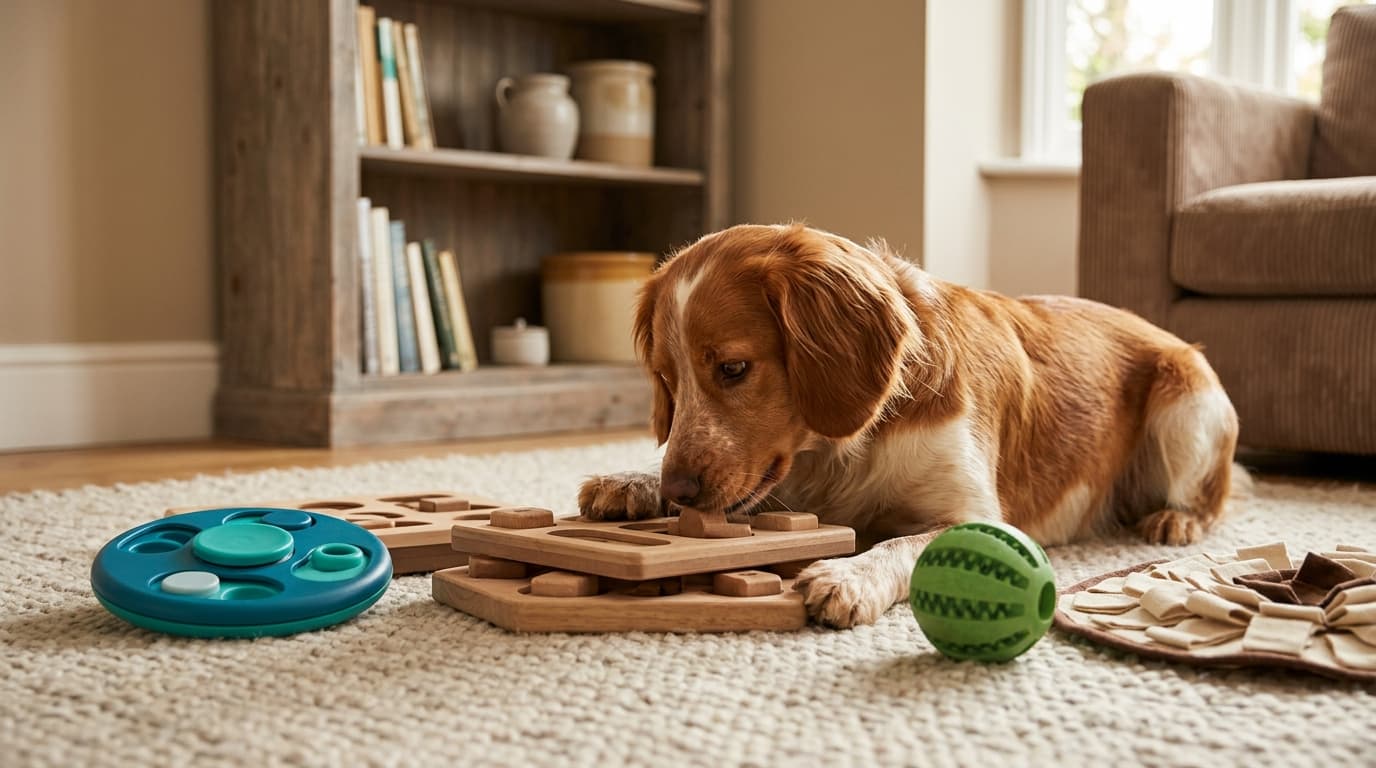
When I worked as a vet tech in Portland, I saw a constant stream of dogs with behavioral issues. Most of the time, they weren't bad dogs. They were just bored out of their skulls. A 30-minute walk exercises a dog's body. A 15-minute puzzle toy session exercises their brain. That mental effort often leaves them more satisfied and tired than the physical exercise.
Mental stimulation isn't a luxury. It's a fundamental need. This is especially true for working breeds and dogs who spend time home alone. Puzzle toys reduce boredom-driven destruction. They build problem-solving confidence. They also slow down fast eaters and give dogs an appropriate outlet for natural foraging instincts.
I organized my picks by difficulty level. You can match the right toy to your dog's current experience.
Try our free tool: Exercise Calculator -- calculate how much mental stimulation and physical activity your dog needs daily.
Beginner Level
These toys are perfect for dogs who've never used a food puzzle before. They reward effort quickly. That builds confidence.
1. Kong Wobbler
The Kong Wobbler is a weighted, egg-shaped dispenser. It drops kibble when your dog pushes it with their nose or paw. It's dead simple. That's exactly the point. It turns mealtime into a 10 to 20-minute activity instead of a 30-second inhale.
The large size holds up to a full cup of kibble. The weighted base keeps it upright enough to be challenging without causing a meltdown. It's also dishwasher-safe. I've used this one extensively at the Multnomah County Animal Shelter to keep stressed dogs occupied. It absolutely holds up.
Best for: Fast eaters, first-time puzzle users, and dogs who need mealtime enrichment.
Difficulty: 1 out of 5
2. Starmark Bob-A-Lot
The Bob-A-Lot is similar in concept to the Kong Wobbler. The difference is adjustable difficulty. Two openings at the top and bottom can be widened or narrowed. You control how easily food falls out. Start wide and tighten the openings as your dog improves.
Here's the thing. The hard plastic is incredibly loud on hardwood floors. (Your downstairs neighbors will hate you.) But for sheer utility and a toy that grows with your dog's skills, it's completely worth it. The unpredictable wobbling motion keeps them highly engaged.
Buy Starmark Bob-A-Lot on Amazon
Best for: Dogs who need gradually increasing challenge, and owners who want one toy that grows with their dog.
Difficulty: 1-3 out of 5 (adjustable)
Intermediate Level
For dogs who've mastered basic dispensers, these offer a step up in complexity.
3. Outward Hound Hide-A-Squirrel
This isn't a food puzzle. It's an interactive plush toy that taps into a dog's hunting drive. Squeaky plush squirrels hide inside a plush tree trunk. Your dog has to figure out how to pull them out. It sounds simple, but the combination of squeaking, digging, and extraction keeps dogs very busy.
I'd skip this if your dog destroys fabric toys. My two-year-old Australian shepherd, Maple, shredded the squirrels within ten minutes. For softer mouths, it's fantastic. Replace the squirrels after each session to keep the game fresh. (Replacement squirrels are sold separately.)
Buy Outward Hound Hide-A-Squirrel on Amazon
Best for: Dogs who love squeaky toys, stuffed animals, and "hunting" games.
Difficulty: 2 out of 5
4. West Paw Toppl
The Toppl looks like a hollow rubber ball with a wide opening. It works beautifully as a stuffable enrichment toy. Smear the inside with peanut butter, yogurt, or wet food. Add some kibble and freeze it for a longer-lasting challenge. The soft, flexible rubber is gentle on gums, and two Toppls can even snap together to create a harder puzzle.
What sealed it for me was the easy cleanup. The wide opening makes it incredibly simple to wash. This is a massive advantage over traditional Kongs. I constantly had to scrub those out with a bottle brush.
Best for: Dogs who love licking, chewing, and working for food. Excellent for crate enrichment and alone-time activities.
Difficulty: 2-3 out of 5 (depending on how you stuff and freeze it)
5. Snuffle Mat
A snuffle mat is a fabric mat covered in dozens of fleece strips. These create hiding spots for kibble and treats. Your dog uses their nose to sniff out buried food. This mimics the natural foraging behavior they'd use in the wild. Five minutes of snuffling can be as tiring as a 20-minute walk.
I use this daily for my nine-year-old lab/pit mix, Benny. His hip dysplasia means he can't run like he used to. This gives him low physical effort but high mental reward. Look for mats with a rubber backing to prevent sliding. (Always supervise to make sure your dog doesn't chew and ingest the fabric.)
Best for: Senior dogs, dogs recovering from surgery, and anxious dogs who benefit from calming nose work.
Difficulty: 2 out of 5
Advanced Level
These toys require multiple steps, sliding mechanisms, or sequential problem-solving. They're best for dogs who've worked their way up from simpler puzzles.
6. Nina Ottosson Dog Brick
The Nina Ottosson Dog Brick is the gold standard of sliding-piece dog puzzles. It features removable bones covering hidden treat compartments. Sliding panels reveal additional compartments underneath. Dogs must learn to lift, slide, and combine both actions to access everything.
Nina Ottosson (now made by Outward Hound) makes four difficulty levels. The Dog Brick is a Level 2, making it a solid starting point for advanced play. Maple figures this out pretty fast now. Three months in, the plastic tracks still slide perfectly.
Buy Nina Ottosson Dog Brick on Amazon
Best for: Intelligent breeds like Border Collies, Poodles, German Shepherds, and Australian Shepherds who need genuine mental challenges.
Difficulty: 3-4 out of 5
7. Trixie Activity Flip Board
The Trixie Flip Board is a definite step up. It features multiple opening mechanisms in a single toy. You get push lids, sliding covers, pull-out drawers, and hinged flaps. Each compartment requires a different technique. That keeps dogs from relying on a single brute-force strategy.
The honest downside? Small parts. I never leave a dog alone with this toy. It's made from durable plastic that's easy to wipe down. The included instruction booklet helps you teach each mechanism gradually.
Buy Trixie Activity Flip Board on Amazon
Best for: Dogs who have already mastered simpler puzzles and need variety in their problem-solving.
Difficulty: 4 out of 5
8. LickiMat Tuff
The LickiMat is deceptively simple. It's a textured rubber mat that you spread with soft food like yogurt, peanut butter, or mashed banana. The textured surface forces slow, repetitive licking. If you freeze it first, it can keep a dog busy for 15 to 30 minutes.
Most vets I know recommend licking for anxiety management because it releases calming endorphins. The "Tuff" version is designed for power chewers with thicker rubber construction. (Maple hasn't destroyed hers after six months in rotation.)
Best for: Anxious dogs, dogs who need calming activities during storms or fireworks, and as a crate or bath-time distraction.
Difficulty: 1-2 out of 5 (but the calming value is the real benefit here)
How to Introduce Puzzle Toys
Want a complete enrichment setup? Our Dog Enrichment Bundle combines puzzle toys, snuffle mats, and interactive feeders.
Jumping straight to an advanced puzzle will backfire. It frustrates your dog. It teaches them the toy isn't worth the effort. Follow this progression:
- Start with wobble dispensers (Kong Wobbler or Bob-A-Lot) using your dog's regular kibble. Let them learn that interacting with the toy produces food.
- Move to stuffable toys (Toppl, LickiMat). Begin unfrozen. Then freeze for longer sessions.
- Introduce snuffle mats with visible treats first. Then bury them deeper.
- Graduate to sliding puzzles (Nina Ottosson, Trixie). Help your dog with the first few attempts so they understand the concept.
Important: Always supervise puzzle toy sessions, especially in the beginning. Remove toys when your dog finishes or loses interest. Leaving them out invites destructive chewing.
Puzzle Toy Safety Tips
In the clinic, I saw plenty of foreign body surgeries. Puzzle toys are perfectly safe if you use common sense.
- Never leave dogs unsupervised with plush puzzles (like the Hide-A-Squirrel) if they're heavy chewers.
- Check rubber toys regularly for cracks, tears, or missing pieces.
- Avoid using treats that are too small and could become a choking hazard in sliding puzzles.
- Wash all puzzle toys after each use to prevent mold and bacteria growth.
- Replace any toy that shows significant wear.
Final Thoughts
Looking for breed-specific enrichment picks? See our best dog toys for Australian Shepherds.
The best puzzle toy is the one your dog actually uses. Start easy. Build their confidence. Gradually increase the difficulty. I rotate between three or four different toys to prevent boredom. Use them as part of your dog's daily enrichment routine, rather than an occasional novelty. A mentally stimulated dog is a happier, calmer, and better-behaved dog.
Related Reading
- 25 Dog Enrichment Activities -- Free and low-cost mental stimulation ideas
- Best Indestructible Dog Toys -- Puzzle toys for power chewers
- Dog Separation Anxiety Guide -- Enrichment tools that help with anxiety