
Why Enrichment Matters as Much as Exercise
A physically tired dog isn't necessarily a fulfilled dog. During my five years working as a vet tech at a mixed-practice clinic here in Portland, I saw a constant stream of "problem" dogs. They were chewing drywall, barking at shadows, and pacing the floors. Their owners were running them five miles a day.
Here's the thing. Physical exercise just builds a better canine athlete. Mental stimulation is what actually prevents destructive behavior and anxiety.
Think of it this way. A 30-minute sniff walk can tire your dog out just as much as an hour of fetch. Their brain is working the entire time.
Here are 25 activities organized by category. They range from zero-cost options around the house to activities using specific gear I've tracked in my product-testing spreadsheet since 2019.
Try our free tool: Exercise Calculator -- calculate exactly how many minutes of exercise and mental stimulation your dog needs daily.
Scent and Foraging Activities
1. Sniff Walks
Instead of marching your dog along at your pace, let them lead. Stop when they want to sniff. Change direction when they pull toward a patch of weeds. A 20-minute sniff walk provides far more mental stimulation than a 40-minute brisk walk. I do this daily with my senior lab/pit mix, Benny.
2. Scatter Feeding
Skip the bowl entirely. Scatter your dog's kibble across the yard and let them forage. This taps into their natural scavenging instincts. It also slows down fast eaters. I started doing this with my 2-year-old Australian shepherd, Maple. Six months in, she completely stopped inhaling her meals.
3. Muffin Tin Puzzle
Place treats in a muffin tin and cover each cup with a tennis ball. Your dog has to figure out how to remove the balls to access the food. It's simple, free, and surprisingly engaging. (It requires zero prep and costs absolutely nothing).
4. Cardboard Box Foraging
Fill a cardboard box with crumpled paper, toilet paper rolls, and hidden treats. Let your dog shred and dig through it to find the food. Cleanup takes two minutes. The mental stimulation lasts much longer. (I'd skip this if your dog tends to actually eat the cardboard).
5. Nosework / Scent Detection
Hide treats or a scented item in one of several boxes and let your dog find it. Start easy and gradually increase the difficulty. Formal nosework classes are great. But you can do a basic version at home with zero training. I've compared this to advanced puzzle toys, and honestly, a few hidden treats in old shoe boxes gets the exact same mental gears turning.
6. Snuffle Mat
A snuffle mat is a fabric mat with deep fleece strips where you hide kibble. Dogs use their nose to root through the fabric. It slows eating and provides foraging enrichment simultaneously. I've tested over sixty dog products just in the enrichment category. The heavier snuffle mats with non-slip backing always hold up best.
Puzzle Toys and Food Dispensers
7. Frozen Kong
Stuff a Kong with peanut butter, banana, and kibble. Freeze it overnight. A frozen Kong can occupy a dog for 20 to 45 minutes depending on how hard you pack it. This is the single most recommended enrichment tool by veterinary behaviorists. (I keep three in rotation at all times).
8. Lick Mats
Spread yogurt, pumpkin puree, or wet food onto a textured lick mat and freeze it. Licking is a naturally calming behavior for dogs. This makes lick mats ideal for anxious dogs or crate settling practice.
9. Puzzle Feeders
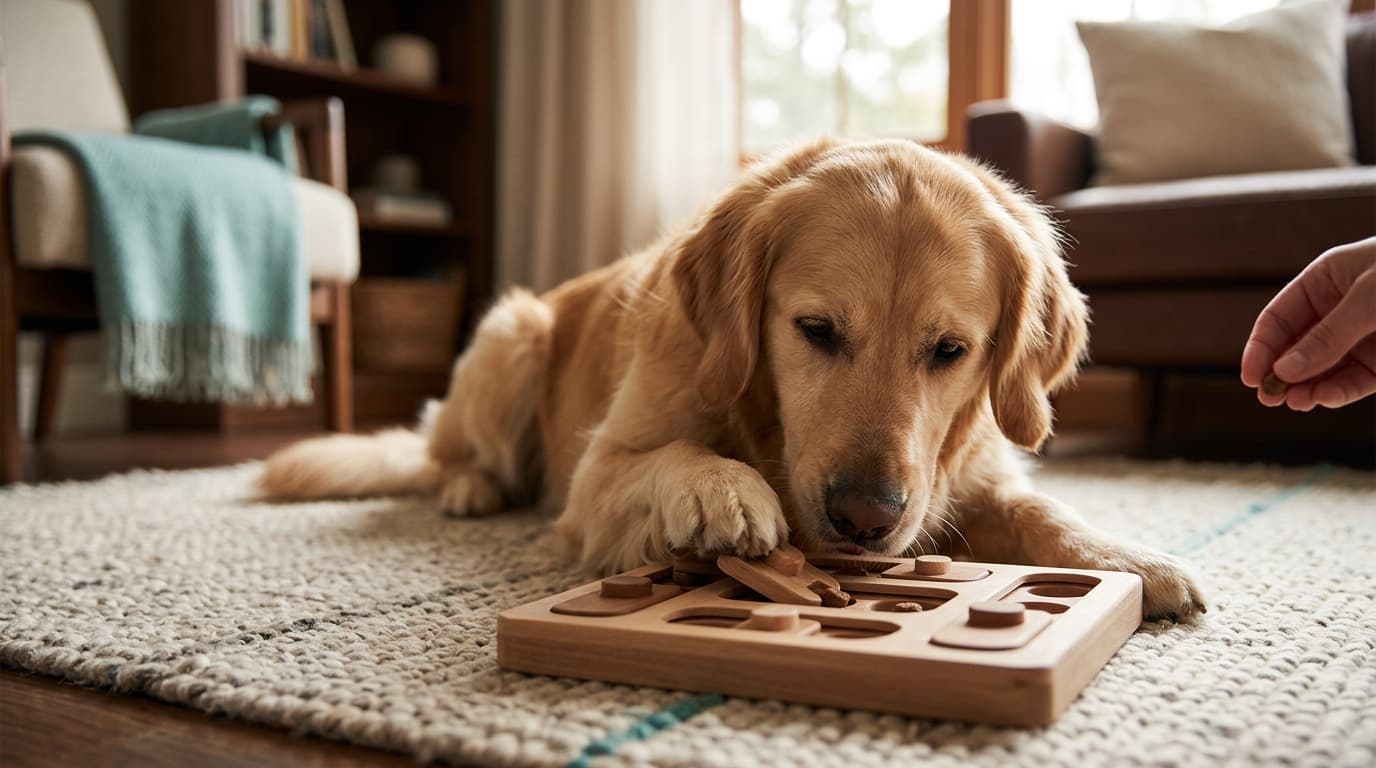
Interactive puzzle feeders (like the Nina Ottosson line) come in various difficulty levels. Start with level one and work your way up. Here's a good rule of thumb. If your dog solves a puzzle in under two minutes, it's time for a harder one.
10. Treat-Dispensing Balls
Put kibble in a treat-dispensing ball and let your dog push it around the house. The unpredictable rolling pattern keeps them engaged far longer than a standard food bowl. Maple bats hers around the kitchen for a solid half hour every morning.
Training Games
11. Name That Toy
Teach your dog the names of specific toys. Then ask them to retrieve a specific one. Start with one toy name. Add another after two weeks. Some dogs can learn a hundred or more object names.
12. Hide and Seek
Have someone hold your dog while you hide in another room. Call your dog and reward them when they find you. This game builds solid recall. It also engages their tracking instincts.
13. The Cup Game
Place a treat under one of three cups. Let your dog watch, then shuffle the cups and let them choose. This tests their ability to track objects. It builds excellent problem-solving skills.
14. Two-Toy Fetch
Instead of throwing one ball and waiting, use two toys. Throw one. When your dog returns, throw the second one immediately. This completely eliminates the keep-away game many dogs play with single-toy fetch.
15. Trick Training
Teaching new tricks is excellent mental enrichment. Beyond the basics, consider teaching paw targeting, a chin rest, backing up, spinning, a figure eight through your legs, or place. Short five-minute sessions are much more effective than long ones.
Physical Enrichment
16. Flirt Pole
A flirt pole is essentially a giant cat toy for dogs. A pole with a rope and toy attached lets your dog chase, pounce, and tug. It's completely worth it for high-drive dogs who need a prey-drive outlet. Maple is a power chewer with endless energy, and a flirt pole genuinely wears her out. Always incorporate impulse control. (Ask for a sit before letting them chase).
17. Backyard Agility
You don't need professional equipment. Use broomsticks across chairs for jumps. Grab a play tunnel from a toy store. Set up weave poles made from cheap PVC pipe. Low-impact agility builds confidence and body awareness.
18. Tug of War
Contrary to outdated advice, tug doesn't cause aggression. It's actually a cooperative game that builds your bond and provides both physical and mental stimulation. Teach a clear "drop it" cue. And yes, let your dog win sometimes.
19. Swimming
For dogs that enjoy water, swimming is outstanding low-impact exercise. It works muscles without stressing joints. What sealed it for me was watching Benny. He has hip dysplasia, and water retrieves are the only rigorous exercise he can safely handle these days.
20. Digging Pit
If your dog loves to dig, give them a designated digging area. A kiddie pool filled with sand or dirt gives them an appropriate outlet. Bury a few toys in it. It saves your garden beds from total destruction.
Sensory Enrichment
21. Sensory Garden
Plant dog-safe herbs like rosemary, basil, and mint in accessible areas of your yard. Different textures underfoot (like grass, mulch, and smooth stones) provide tactile stimulation. Add a shallow water feature for sound enrichment.
22. Novel Object Introduction
Periodically introduce new objects into your dog's environment. A cardboard box. A new texture of blanket. A safe household item they haven't seen before. Novelty stimulates curiosity. It really builds confidence in naturally cautious dogs.
23. Music and Sound Enrichment
I volunteer monthly at the Multnomah County Animal Shelter, and I always play music in the kennels. Studies from the Scottish SPCA and University of Glasgow actually found that dogs are most relaxed when listening to reggae and soft rock. Classical music scored well in the research, too. Playing calming music during rest periods genuinely reduces stress behaviors.
24. Car Rides to New Locations
Simply driving your dog to a new park or neighborhood provides a flood of novel scents and sights. The unfamiliar environment naturally engages their brain. It works much better than marching the exact same walking route every single day.
25. Playdates with Compatible Dogs
Social enrichment with well-matched dogs provides stimulation that no toy or puzzle can replicate. Focus on quality over quantity. One good canine friend is better than a chaotic dog park experience. Always supervise and read both dogs' body language.
Building an Enrichment Rotation
Want a ready-made enrichment setup? Our Dog Enrichment Bundle combines puzzle toys, snuffle mats, and interactive feeders into one kit.
You don't need to do all 25 activities every week. Instead, create a rotation:
- Daily: At least one food-based enrichment (a Kong, scatter feeding, or a snuffle mat) and one sniff walk.
- Several times per week: A training game or trick session (just 5 to 10 minutes).
- Weekly: A novel activity or outing to a new location.
- As needed: Social enrichment with compatible dogs.
The key is variety. Dogs habituate to the same activity quickly. Rotate regularly to keep things fresh.
The Bottom Line
Looking for breed-specific enrichment? See our best dog toys for Australian Shepherds.
Enrichment isn't optional. It's a core need for dogs, right alongside food, water, and shelter. The activities above require minimal financial investment.
The honest downside? It takes a little extra effort on your part. But the payoff in your dog's behavior and confidence makes it completely worth it. Start with two or three that fit your lifestyle. Build from there.
Related Reading
- Best Dog Puzzle Toys -- Detailed reviews of enrichment toys
- Best Indestructible Dog Toys -- Durable options for power chewers
- Dog Separation Anxiety Guide -- Enrichment as an anxiety management tool