
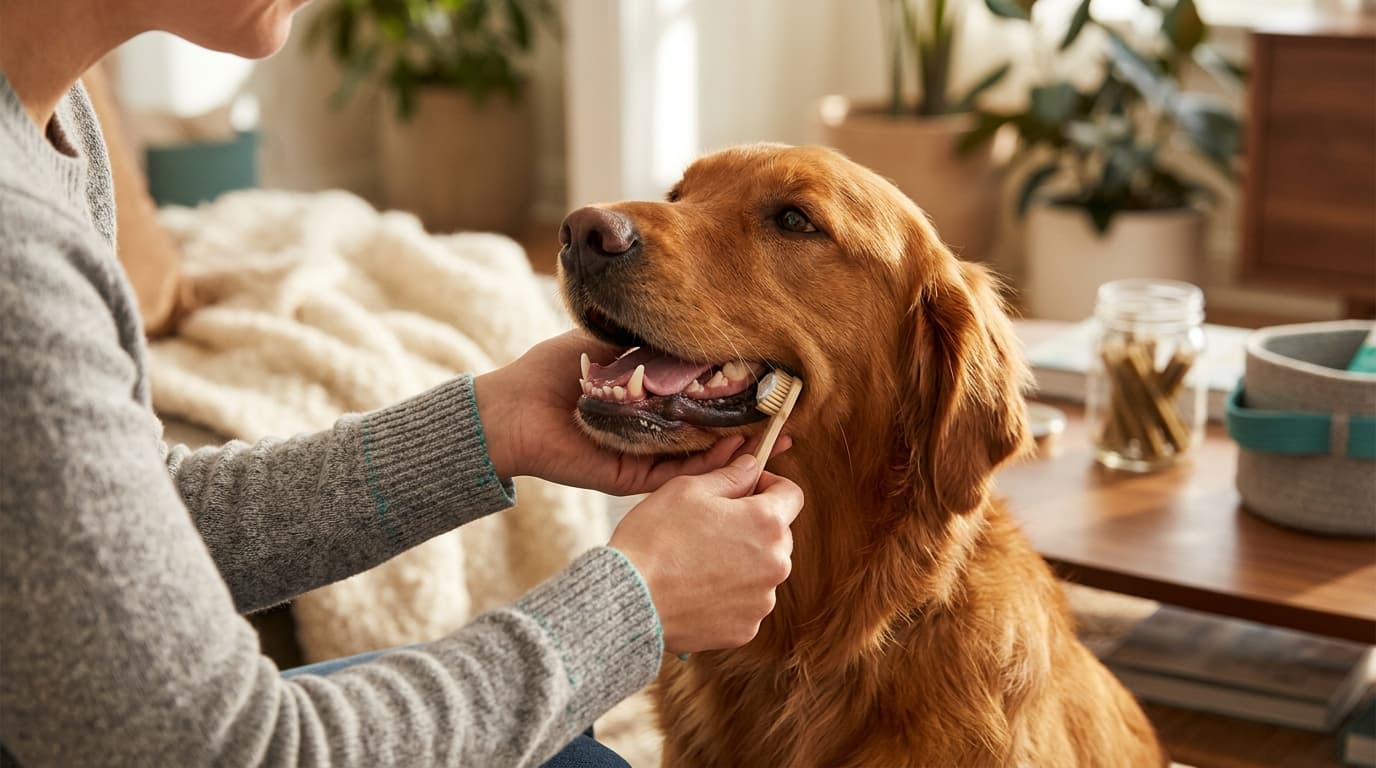
Build the routine around brushing and veterinary care
At-home care and veterinary dental care do different jobs. Your daily routine helps manage plaque; a veterinary assessment checks for problems you cannot judge from the visible tooth surface alone.
The AVMA's pet dental-care guidance recommends regular brushing and veterinary advice on suitable dental products. Start with a routine you can maintain, then adapt it with your veterinarian.
Check for discomfort before starting
Contact your vet if you notice bleeding or swollen gums, a broken tooth, dropping food, or changes in chewing. Persistent bad breath also deserves attention. Dogs can have dental problems even while eating normally.
AAHA explains these signs and why regular examinations matter. Avoid brushing a painful mouth or trying to solve the problem by buying a stronger chew.
Step 1: work toward daily toothbrushing
Choose a soft brush that comfortably fits your dog's mouth. Use toothpaste intended for pets rather than human toothpaste.
Introduce the process gradually: let your dog investigate the supplies, reward calm handling, and begin with brief contact on a few teeth. Increase the brushing as your dog becomes comfortable; forcing a long session can make the next attempt harder.
For the full technique, follow our step-by-step guide to brushing your dog's teeth. UC Davis's dental home-care instructions explain gentle brushing at the gumline and building a daily habit.
Step 2: decide whether to add a dental chew
If a chew fits your dog's needs, compare the exact product and size before purchasing. Brand names and bag colors are not reliable substitutes for a feeding chart.
Use our dental-chew buying guide to shortlist options by age and weight. If you already have a brand in mind, the Greenies, WHIMZEES Brushzees, and OraVet comparison explains the differences and links to the specific packs.
Those guides contain affiliate links. As an Amazon Associate, we earn from qualifying purchases.
Before serving a chew:
- Read the selected product's age and weight limits.
- Check ingredients against any dietary restrictions.
- Include the serving in your dog's daily food allowance.
- Stay nearby and observe how your dog chews.
- Ask your vet about an alternative if your dog gulps the product.
Chews supplement your routine. They do not replace an examination or treatment when a tooth or gum is already painful.
Step 3: assess other dental products separately
Some owners find wipes, diets, or water additives easier to use. Ask your vet which form fits your dog's mouth and medical history.
Check the specific product on the VOHC accepted-products list. The accepted claim can differ between products, and acceptance of one formula does not apply automatically to a brand's entire range.
An earlier version of this article called Oxyfresh VOHC accepted. It was not on the current list when checked September 15, 2026, so we have removed that claim. This does not, by itself, prove that the product has no benefit.
Step 4: plan professional care with your vet
A professional dental assessment may involve dental X-rays and cleaning under anesthesia. The schedule depends on your dog's oral health and risk factors; it is not the same for every dog.
AAHA's explanation of anesthesia and dental cleaning describes why a complete examination and cleaning below the gumline require more than scraping visible tartar from an awake pet. Ask your veterinary team to explain the proposed procedure, monitoring, and follow-up home care.
Make the routine easy to repeat
| When | Your next step |
|---|---|
| Each day | Aim for brushing at a familiar time, progressing at your dog's pace |
| If adding a chew | Follow the exact product's serving instructions and supervise |
| When supplies run low | Recheck weight, product size, ingredients, and pack count |
| If pain or bleeding appears | Contact your vet before continuing home care |
| At veterinary visits | Ask about oral health, professional care, and product suitability |
Keep a small note of the product name and size you use. That makes it easier to reorder the right option and discuss it with your vet. If you want to choose a chew now, start with the three-option dental-chew comparison.