
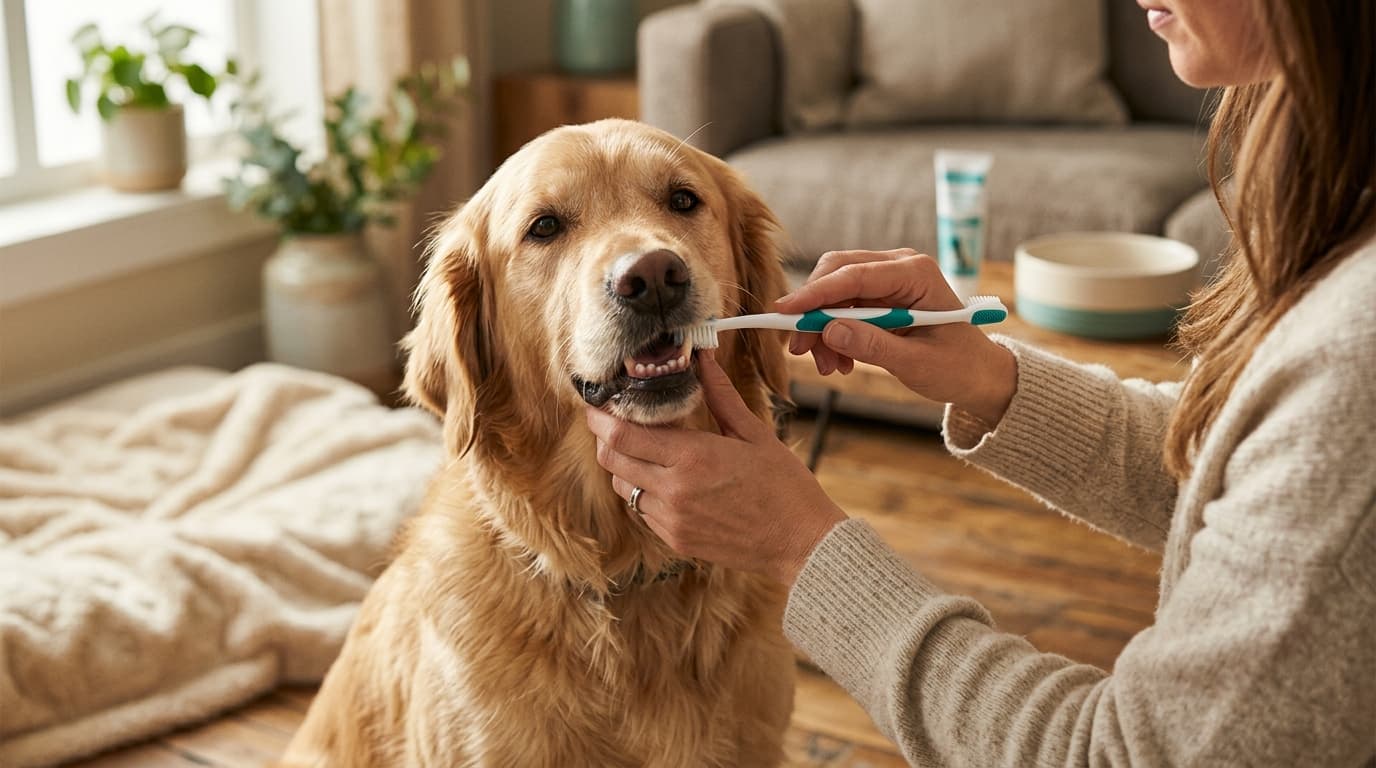
Start gently and build a daily habit
A successful brushing routine begins with your dog feeling comfortable. You do not need to clean every tooth on the first attempt.
If your dog's mouth is painful, gums bleed, or a tooth looks broken, arrange a veterinary check before brushing. AAHA notes that brushing inflamed gums can cause pain.
What you need
- A soft toothbrush with a head that fits your dog's mouth.
- Pet toothpaste; do not use human toothpaste.
- A quiet spot and a reward your dog enjoys.
A pet brush or a soft child's toothbrush can work. UC Davis's toothbrushing training guide includes both options and recommends progressing at your pet's pace.
1. Introduce the toothpaste and brush
Let your dog sniff the supplies. Offer a tiny taste of pet toothpaste, then reward relaxed interest. Later, put a little on the brush and allow your dog to lick it.
The goal at this stage is familiarity. If your dog pulls away, shorten the session and return to a step they accept.
2. Practise calm mouth handling
Gently lift the lip for a moment, then release and reward. Work toward briefly touching the outer surfaces of a few teeth. Avoid forcing the mouth open or continuing when your dog becomes tense.
There is no fixed number of days for each stage. A dog comfortable with face handling may progress differently from one that finds it worrying.
3. Brush a few teeth with light pressure
Start with a short, gentle brush along the outer tooth surfaces and gumline. Increase the area as your dog becomes comfortable.
UC Davis's dental home-care instructions describe holding the brush at roughly 45 degrees toward the gumline and using gentle movements. Ask your veterinary team to demonstrate the technique if positioning the brush is difficult.
Do not turn brushing into a wrestling match. Pause if your dog becomes distressed; seek veterinary advice if the reaction suggests pain.
4. Tie brushing to a familiar daily activity
Keeping the supplies together and choosing a regular time can make the habit easier to remember. Aim for daily brushing as your dog learns to tolerate it.
Finish with something your dog enjoys. A calm, repeatable routine is easier to build when each session ends comfortably.
What if brushing is still difficult?
Tell your veterinary team what happens: whether your dog dislikes the flavor, avoids face handling, bites the brush, or seems uncomfortable. Those are different problems and may need different adjustments.
The AVMA recommends discussing dental products with your veterinarian. A suitable dental chew may supplement home care while you continue training, but chewing should not be painful and the product must fit your dog's age, weight, and diet.
Choosing a chew? Our dental-chew buying guide gives a short list with size checks. For a direct brand comparison, read Greenies vs WHIMZEES Brushzees vs OraVet. Those guides contain Amazon affiliate links; as an Amazon Associate, we earn from qualifying purchases.
Brushing does not replace veterinary dental care
Home brushing cannot show you what is happening around tooth roots. Keep dental checks in your dog's veterinary routine and ask when professional cleaning is appropriate.
Our complete dog dental-care guide brings together brushing, product selection, and veterinary visits so you can decide on the next step.