
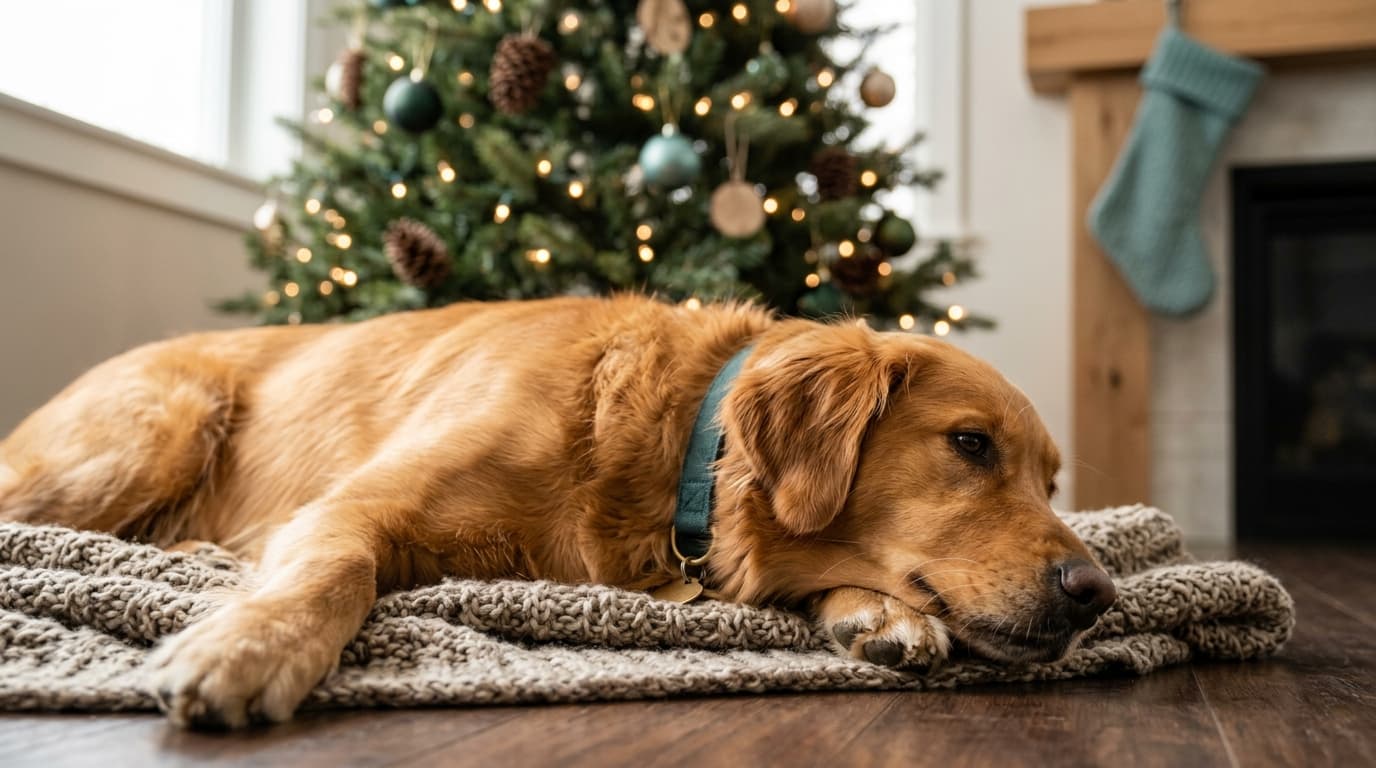
The Holidays Are Wonderful—and Dangerous for Dogs
When I worked at the clinic, the stretch from Thanksgiving through New Year was pure chaos. It's the busiest time of year for veterinary emergency rooms. Between toxic foods, dangerous decorations, disrupted schedules, and fireworks, the holiday season is a minefield for dogs.
The good news is that nearly all holiday emergencies are preventable. Here's my guide to keeping your dog safe and out of the ER through the season.
Toxic Holiday Foods
The holiday table is loaded with stuff humans love and dogs can't handle. Make sure everyone in your house knows what's off-limits. (I just tape a list to my fridge when hosting).
Foods That Are Toxic or Dangerous
- Chocolate. The darker it is, the worse it is. Baking chocolate and dark chocolate are the biggest risks. Even milk chocolate can cause vomiting, diarrhea, rapid heart rate, and seizures.
- Xylitol. You'll find this sugar substitute in sugar-free candy, gum, baked goods, and some peanut butters. Even tiny amounts cause a rapid drop in blood sugar, liver failure, and death.
- Grapes and raisins. Think fruitcake, trail mix, and holiday baking. Just a few can cause acute kidney failure in some dogs.
- Onions and garlic. These are everywhere in stuffing, gravy, and casseroles. They damage red blood cells and cause anemia, especially with repeated exposure.
- Macadamia nuts. Often hidden in cookies and gift baskets. They cause weakness, vomiting, tremors, and hyperthermia.
- Cooked bones. Turkey and ham bones splinter when cooked. They can puncture the digestive tract or cause blockages. (Benny is a master counter-surfer, so my turkey carcass goes straight into the outside bin).
- Alcohol. Beer, wine, liquor, and alcohol-soaked foods. They cause vomiting, diarrhea, breathing trouble, and in severe cases, coma or death.
- Fatty foods. Rich, greasy stuff like ham, turkey skin, gravy, and butter. These trigger pancreatitis, which is a painful and life-threatening inflammation of the pancreas. I saw this daily at the clinic in December.
What to Do If Your Dog Eats Something Toxic
- Don't wait for symptoms. Call your vet or the ASPCA Animal Poison Control Center (888-426-4435) immediately.
- Be ready to tell them exactly what your dog ate, how much, and when.
- Don't induce vomiting unless a vet tells you to.
- If you're sent to the ER, bring the packaging or a sample of what they ate.
Try our free tools: Toxic Food Checker to see if holiday foods are safe, and Plant Safety Checker for holiday plants.
Dangerous Decorations
Decorations are shiny, weird, and fascinating to dogs. Unfortunately, that's exactly what makes them dangerous.
Christmas Tree Hazards
- Tinsel. I'd skip this if you have pets. If swallowed, it causes a linear foreign body obstruction in the intestines. That means emergency surgery.
- Ornaments. Glass ornaments shatter into sharp fragments. Hang breakables high on the tree, well out of tail-wagging range.
- Tree water. Stagnant tree water holds bacteria, mold, fertilizer, and sap. Cover the basin or use a thick tree skirt to block access.
- Electrical cords. Chewing on light cords leads to electrical burns, shock, or house fires. Maple chewed everything her first year, so I used hard plastic cord covers. Bitter apple spray works well, too.
Other Decoration Concerns
- Candles. A wagging tail knocks over a candle in a second. Use flameless LED candles if your dog is in the room.
- Potpourri. Liquid potpourri is caustic. It burns the mouth, esophagus, and skin on contact. Dry potpourri causes blockages if eaten.
- Gift wrap and ribbons. Ribbon and string carry the same linear foreign body risks as tinsel. Throw wrapping materials away the second gifts are opened.
- Snow globes. Some contain antifreeze (ethylene glycol). This stuff is highly toxic. Even a small amount causes kidney failure.
Toxic Holiday Plants
A lot of classic holiday greenery is bad news for dogs. Here's the thing about plants:
- Poinsettias. Mildly toxic. Eating them usually causes drooling, vomiting, and mild stomach upset. Rarely serious, but keep them out of reach.
- Mistletoe. Much more dangerous than poinsettias. It causes vomiting, diarrhea, breathing issues, and cardiovascular problems depending on the type and amount.
- Holly. The berries and leaves cause vomiting, diarrhea, and lethargy.
- Amaryllis. The bulb is the most toxic part. It causes vomiting, diarrhea, abdominal pain, and tremors.
- Christmas cactus. Generally considered non-toxic. Eating it might still cause a mild stomach ache, though.
If you want greenery in your home, artificial versions or pet-safe alternatives are worth it.
Managing Holiday Stress
The holidays wreck routines. You have unfamiliar guests, loud noises, and a house full of weird smells. For many dogs, this is genuinely stressful. I see this constantly with the dogs I work with at the Multnomah County Animal Shelter—disruption causes severe anxiety.
Signs of stress in dogs:
- Panting when not hot or exercised
- Pacing or inability to settle
- Hiding or retreating to another room
- Loss of appetite
- Excessive licking or yawning
- Trembling
- Changes in bathroom habits
How to reduce holiday stress:
- Maintain your dog's routine as closely as possible. Same walk times. Same feeding times. Same bedtime.
- Provide a quiet retreat. Set up a room or crate away from the noise. Add familiar bedding and a chew toy. I play white noise for Benny when I host large dinners.
- Brief guests on the rules. Ask visitors not to feed your dog from the table. Tell them to leave the dog alone in their safe space. Let the dog approach them on their own terms.
- Exercise before events. A tired dog handles stress better. I take Maple for a long run before anyone comes over.
- Consider calming aids. Talk to your vet about options like the Thundershirt, Adaptil pheromone diffusers, or prescription meds. (I saw a noticeable drop in Benny's panting after two weeks of using a Thundershirt, but severe panic needs medication).
Fireworks and New Year's Eve
Fireworks are a massive trigger for noise phobia. New Year's Eve fireworks cause panic, escape attempts, and injuries.
Preparing for fireworks:
- Bring your dog inside well before they start. Don't leave them in the yard.
- Close windows, curtains, and blinds to muffle sound and block flashes.
- Turn on the TV or a white noise machine to drown out the booms.
- Create a safe space. Many dogs feel safest in an interior room, a closet, or their crate (if they're already crate-trained).
- Stay calm yourself. Dogs pick up on our anxiety. Act normal, and don't make a big deal out of the noise.
- Update ID tags and microchips. More dogs go missing on New Year's Eve and the Fourth of July than any other days. If your dog gets out, current ID is their ticket home.
- Talk to your vet in advance. If your dog has severe noise phobia, most vets I know recommend prescription medications like trazodone or Sileo. They're highly effective, but you need to get them prescribed weeks ahead of time.
Holiday Travel With Your Dog
If you're hitting the road with your dog, plan ahead:
- Update vaccinations and get health certificates if you're crossing state lines or boarding.
- Bring familiar items. Their bed, a favorite toy, and their regular food help reduce stress in a new place.
- Research emergency vet clinics at your destination before you leave.
- Secure your dog in the car with a crash-tested harness or a tied-down crate. (I test gear constantly, and I currently use a Ruffwear crash harness for Maple. Six months in, it holds up beautifully).
- Never leave your dog unattended in a car in cold weather. Hypothermia is just as dangerous as heatstroke.
If you can't bring them along, the honest downside is the planning required. Write out detailed instructions for your pet sitter. Include feeding amounts, medications, emergency contacts, and your vet's information.
Enjoy the Season Safely
Building a holiday safety kit? Our Dog Anxiety Relief Kit helps manage fireworks stress and holiday chaos.
The holidays should be fun for everyone in your house. A little preparation is all it takes to keep your dog safe. Keep the toxic foods locked up. Supervise them around decorations. Stick to your routines, and plan ahead for fireworks and travel.
What sealed it for me was realizing that an ounce of prevention means I get to enjoy my Christmas, too. Your dog will be happier, safer, and ready to ring in the new year right there with you.
Related Reading
- How to Dog-Proof Your Christmas Tree -- Specific tree-proofing strategies
- Best Dog Advent Calendars -- Safe holiday fun for your dog
- Dog Separation Anxiety Guide -- Managing holiday stress