
Affiliate Disclosure: This post contains Amazon affiliate links. I earn a small commission at no extra cost to you.
Why Every Dog Owner Needs a First Aid Kit
When I worked as a vet tech in Portland, I saw a pattern every single weekend: owners rushing in with injuries that could have been stabilized or managed at home if they'd had basic supplies and knowledge. Cut paw pads from broken glass. Bee stings with visible swelling. Torn nails bleeding everywhere. Tick embedded behind an ear.
None of these are emergencies if you're prepared. All of them become stressful crises if you're standing in your kitchen with nothing but paper towels and panic.
A dog first aid kit is essential whether you hike remote trails or walk city sidewalks. My lab/pit mix Benny once sliced his paw pad on a piece of glass in our own neighborhood. Having styptic powder and bandages in my pack meant I could stop the bleeding and get him home calmly instead of carrying a panicking, bleeding dog ten blocks.
Best Pre-Built Dog First Aid Kits
1. ARCA PET Dog First Aid Kit (Best Overall)
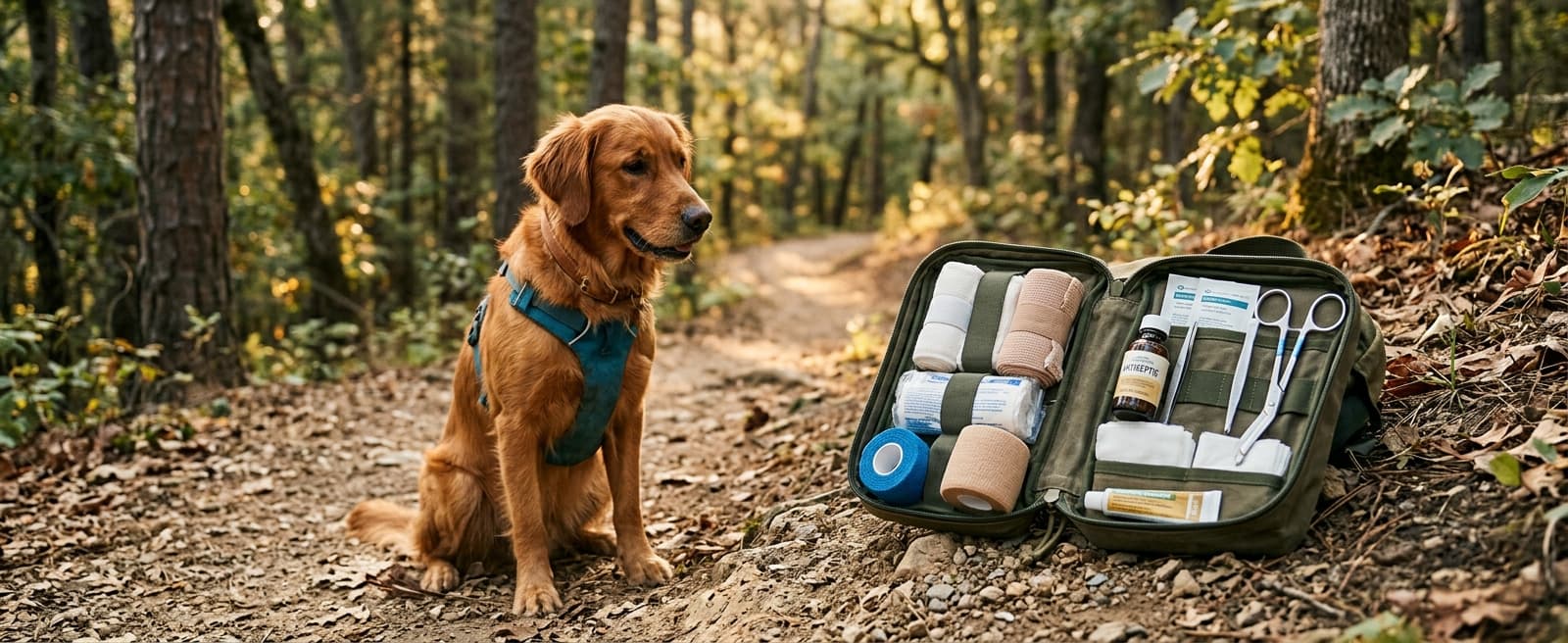
This 40-piece kit is the one I recommend to every new dog owner. It covers the essentials: bandages, antiseptic wipes, a tick remover, syringe for wound flushing, emergency blanket, and an illustrated reference guide. The case is compact enough to fit in a daypack or glove compartment.
What sets it apart from generic kits is that it's designed specifically for dogs. The bandage sizes are appropriate. The syringe is the right size for wound irrigation. The reference guide covers dog-specific emergencies. Most "pet" first aid kits are just relabeled human kits. This one actually thought about the end user.
Buy ARCA PET Dog First Aid Kit on Amazon
Key highlights:
- 40 pieces designed specifically for dogs
- Compact, durable carry case
- Includes tick remover, syringe, and emergency blanket
- Illustrated emergency reference guide
- Fits in a daypack or car glove compartment
Best for: Everyday preparedness, new dog owners, and a reliable base kit to build on.
2. Adventure Medical Kits Trauma Pak (Best for Hikers)
If you hike with your dog regularly, you need something more robust. The Adventure Medical Kits Trauma Pak includes QuikClot sponge for severe bleeding, which is a game-changer for deep lacerations in the backcountry where a vet is hours away. The kit is ultralight (under a pound) and designed for serious outdoor situations.
I carry this on every trail run with Maple. It's saved me twice -- once for a nasty paw laceration on a rocky trail, and once for a deep scratch from brush that wouldn't stop bleeding with standard pressure alone.
Buy Adventure Medical Kits Trauma Pak on Amazon
Key highlights:
- QuikClot sponge for severe bleeding
- Ultralight (under 1 pound)
- Designed for backcountry emergencies
- Compact enough for any daypack
- Professional-grade wound care supplies
Best for: Hikers, trail runners, campers, and anyone who takes their dog into remote areas.
Must-Have Supplies to Add
Heading out on trails? Our Dog Hiking Adventure Kit pairs first aid supplies with hydration gear, paw protection, and a backpack.
No pre-built kit is complete. Here are the individual items I add to every first aid kit:
Miracle Care Kwik Stop Styptic Powder (Essential)
Styptic powder stops bleeding from nail cuts and minor wounds in seconds. If you trim your dog's nails at home (and you should), you will eventually cut the quick. It's inevitable. Having styptic powder on hand turns a bloody disaster into a 10-second fix.
I also carry it on hikes for torn nails and minor paw cuts. It's one of those supplies that costs almost nothing and saves you enormous stress.
Buy Kwik Stop Styptic Powder on Amazon
Vetericyn Plus Wound Care Spray (Essential)
This non-toxic antimicrobial spray is safe for all wounds and won't sting on open cuts. Most importantly, it's safe if your dog licks the wound (and they will). I used this constantly at the clinic for hot spots, abrasions, and post-surgical care. It kills bacteria without the harsh chemicals found in human antiseptics.
Buy Vetericyn Plus Wound Care Spray on Amazon
Benadryl Ultratabs (Essential)
Benadryl (diphenhydramine) is the single most important human medication to have on hand for your dog. It treats allergic reactions from bee stings, insect bites, and mild food reactions. The standard veterinary dose is 1mg per pound of body weight. (Always confirm dosing with your own vet.)
I've administered this in the field multiple times for bee stings that caused facial swelling. Having it on hand bought us time to get to a clinic calmly rather than in full emergency mode.
Buy Benadryl Ultratabs on Amazon
TickCheck Premium Tick Remover Kit
Ticks need to be removed properly. Squeezing or twisting them can leave the head embedded and increase infection risk. The TickCheck kit includes stainless steel removers for both large and small ticks plus a magnifying card for identification.
In the Pacific Northwest, we deal with ticks from early spring through fall. I check both dogs after every hike and have removed more ticks than I can count. Proper tools make it fast and clean.
Buy TickCheck Tick Remover Kit on Amazon
What to Know Before You Need It
Having supplies is only half the preparation. You need to know how to use them. Here are the most common scenarios and what to do:
Bleeding Paw Pad
- Apply direct pressure with clean gauze for 5 minutes.
- If bleeding continues, apply styptic powder.
- Rinse with clean water or saline solution.
- Apply Vetericyn spray.
- Bandage with gauze and self-adhesive wrap. Not too tight.
- See a vet if bleeding doesn't stop within 15 minutes or the cut is deeper than the pad surface.
Bee Sting or Insect Bite
- Remove the stinger if visible (scrape with a credit card, don't squeeze with tweezers).
- Give Benadryl at 1mg per pound of body weight.
- Apply a cold compress for 10 minutes.
- Monitor for difficulty breathing, extreme swelling, or collapse. These indicate anaphylaxis -- go to an emergency vet immediately.
Torn Nail
- Apply styptic powder to the exposed quick.
- If you don't have styptic powder, press cornstarch or flour against the nail.
- Keep the paw clean and dry.
- See a vet if the nail is broken below the quick or won't stop bleeding.
Tick Removal
- Grasp the tick as close to the skin as possible with fine-tipped tweezers or a tick removal tool.
- Pull straight up with steady, even pressure. Don't twist.
- Clean the bite area with antiseptic.
- Save the tick in a sealed bag for identification if your vet requests it.
- Monitor the bite site for 2 weeks for redness, swelling, or a bullseye rash.
Heat Stroke
- Move your dog to shade or air conditioning immediately.
- Apply cool (not cold) water to their belly, armpits, and groin.
- Offer small sips of water.
- Go to an emergency vet. Heat stroke causes organ damage that isn't visible externally.
Building Your Complete Kit
Here's the full checklist I use for my kits at home and in my pack:
Pre-built kit base:
- ARCA PET kit (for home and car) or Adventure Medical Kits Trauma Pak (for hiking)
Individual additions:
- Kwik Stop styptic powder
- Vetericyn Plus wound spray
- Benadryl (25mg tablets)
- Tick remover tool
- Extra gauze rolls and non-stick pads
- Self-adhesive cohesive bandage (doesn't stick to fur)
- Blunt-tip scissors
- Digital rectal thermometer (normal dog temp: 101-102.5 F)
- Emergency vet phone number written on a card (phones die)
Final Thoughts
A first aid kit you never use is a success. It means nothing went wrong. But having one ready means that when something does go wrong -- and with dogs, it eventually will -- you handle it calmly and effectively instead of scrambling. The ARCA PET kit plus the individual additions I listed above costs under $75 total. That's less than a single emergency vet copay.
Build the kit. Learn the basics. Keep it in your car and your daypack. It's one of the most responsible things you can do as a dog owner.
Related Reading
- Best Dog Boots for Winter -- Prevent paw injuries before they happen
- Best Dog Paw Protection -- Wax, boots, and balm
- Traveling with Your Dog -- Safety gear for the road