
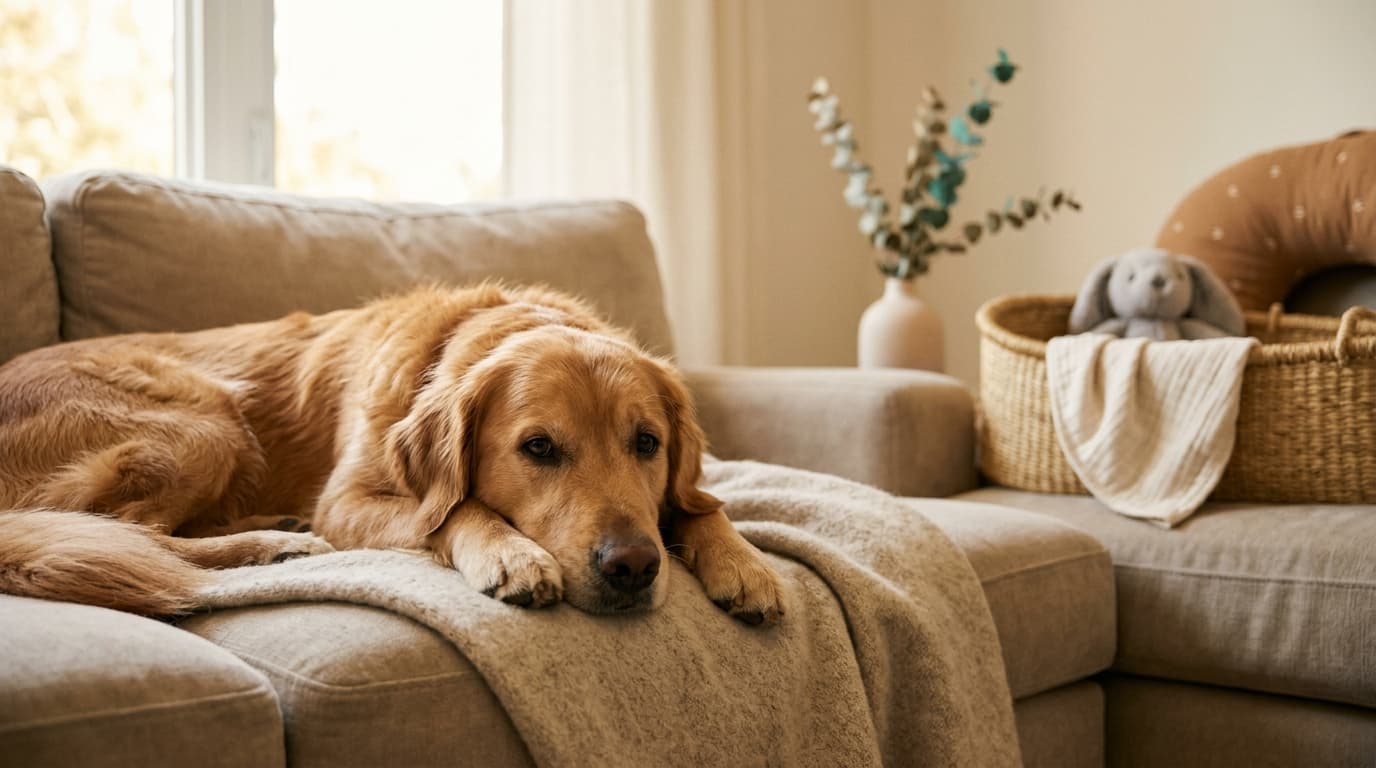
Start Early: 3 to 4 Months Before the Baby Arrives
Back when I spent five years working at a clinic in Portland, expecting parents constantly asked me how to handle their dogs. The biggest mistake I saw? Waiting until the third trimester. Dogs are absolute creatures of habit. A new baby disrupts every routine they've ever known. Starting early gives your dog time to adjust gradually, rather than having their entire world flipped overnight.
Adjust the Schedule Now
If your dog currently gets a 7:00 AM walk that'll inevitably shift to 6:00 AM, start making that change today. Gradually shift walk times, feeding times, and play sessions. Match the schedule you realistically expect to maintain with a newborn.
Teach Essential Commands
If your dog doesn't already have a solid foundation in these commands, start training immediately:
- "Go to your place." Teach them to go to a specific bed or mat and stay there until released. This is invaluable when you're feeding, changing, or soothing the baby. (It's the only way I survive dinner time with my two-year-old Australian shepherd, Maple.)
- "Leave it." They need to understand that baby items—pacifiers, blankets, toys—are strictly off-limits.
- "Gentle." Practice rewarding your dog for soft, calm interactions. Offer treats from a closed fist. Only open your hand when they use a gentle mouth.
- "Off." If your dog currently sleeps on the furniture, decide right now if that'll continue. If not, retrain them before the baby arrives.
Address Behavioral Issues
Any existing behavioral problems will just amplify under the stress of a newborn. If your dog has resource guarding, separation anxiety, reactivity to sounds, or a jumping habit, address these with a qualified trainer now. Don't wait. (I volunteer monthly at Multnomah County Animal Shelter, and I've seen way too many surrenders because of this exact oversight.)
2 Months Before: Introduce New Sights, Sounds, and Smells
Baby Sounds
Download recordings of a baby crying, cooing, and babbling. Play them at low volume during mealtimes and play sessions. Gradually increase the volume to a realistic level over two to three weeks. If your dog shows signs of stress (like panting, pacing, or whale eye), drop the volume back down. Proceed more slowly.
Baby Gear
Set up the crib, stroller, swing, and changing table early. Let your dog investigate the equipment at their own pace, rewarding calm behavior. I'd skip this if your dog is already terrified of wheels, but otherwise, practice walking with the stroller while managing your dog on a leash. This takes serious coordination. (Trust me, it's much better to practice now than to figure it out completely sleep-deprived.)
Baby Scents
Rub the baby's lotion and diaper cream on a blanket, and leave it near your dog's resting area. This holds up as one of the best tricks after the baby is actually born. Have someone bring a scented blanket home from the hospital before you walk through the door.
1 Month Before: Practice the New Routine
Reduce Attention Gradually
This sounds harsh, but it prevents a stark contrast when the newborn absorbs all your attention. If your dog is used to being the center of the universe, gradually shift to shorter, more structured interaction periods. Fill the gaps with puzzle toys, stuffed Kongs, and snuffle mats.
Create Safe Spaces
Set up baby gates to create zones in your home. Your dog should have a designated safe space where they can retreat when things get overwhelming. (My 9-year-old lab/pit mix, Benny, has hip dysplasia, so his quiet corner with an orthopedic bed is strictly off-limits to everyone.) Make this space positive by feeding meals and offering special chews there.
Practice With a Doll
Yes, this sounds completely ridiculous. But it works. Carry a baby doll around the house. Practice holding the doll while asking your dog to sit, go to their place, or settle at your feet. This teaches them that your arms being occupied doesn't mean all rules are suspended.
Introduction Day: When the Baby Comes Home
Before Walking Through the Door
Have someone else hold the baby while the person who's been away at the hospital greets the dog first. Your dog has missed you. They need that initial burst of excitement to pass before meeting the newborn.
The First Introduction
Keep your dog on a loose leash held by a second person. Sit calmly with the baby and allow the dog to approach and sniff at their own pace. Speak in a calm, normal voice. (Skip the high-pitched, excited tone most of us instinctively use.) Reward calm, gentle investigation with treats.
Here's the thing: don't force the interaction. If your dog is nervous or disinterested, let them walk away. They'll come back when they're ready.
What to Watch For
Positive signs: Relaxed body posture, gentle sniffing, soft eyes, turning away calmly after investigating.
Concerning signs: Stiff body, hard stare, raised hackles, growling, excessive lip licking, or whale eye (showing the whites of their eyes). If you see any of these, calmly increase the distance between the dog and baby. Consult a professional trainer or veterinary behaviorist immediately.
The First Weeks: Building Positive Associations
Pair Baby Time With Dog Rewards
Every time the baby cries, toss your dog a treat. Every time you nurse or bottle-feed, give your dog a frozen Kong in their safe space. You want your dog to think: "When the baby is around, good things happen to me."
Maintain Routines
The honest downside of having a newborn is how exhausting it is. Your world is upside down. But your dog's routine matters more now than ever. If you can't manage walks yourself, hire a dog walker for the first few weeks. Keep feeding times consistent. Even 10 minutes of focused one-on-one time daily is worth it to prevent behavioral regression.
Never Leave Them Unsupervised
This is a non-negotiable rule that applies regardless of how gentle your dog seems. Dogs can be startled by sudden movements, and babies are entirely unpredictable. Use baby gates, crates, and closed doors to ensure separation when you aren't actively watching.
Ongoing Management: Months 2 Through 12
As the Baby Becomes Mobile
About six months in, the dynamic shifts dramatically once your baby starts crawling. A tiny human moving toward a dog can trigger prey drive, fear, or resource guarding in even the gentlest dog. (With Maple's intense herding instincts, fast-moving toddlers are highly triggering, so I manage her environment strictly.) Continue using gates and supervision. Teach the growing child to be gentle with the dog, and always give your dog an escape route.
Signs Your Dog Is Struggling
- Withdrawing or hiding more than usual
- Loss of appetite
- Destructive behavior that wasn't present before
- House training regression
- Increased barking or whining
- Stiffness or growling around the baby
If you notice any of these patterns, don't wait for them to escalate. Contact a certified professional dog trainer or veterinary behaviorist.
When to Seek Professional Help
Seek professional help immediately if your dog:
- Growls, snaps, or lunges at the baby
- Guards resources (food, toys, resting spots) aggressively
- Shows predatory behavior (fixating, stalking, chasing)
- Has a history of biting
These aren't situations for internet advice or DIY training. A qualified professional can assess the risk and create a safety plan. When I worked in the clinic, I saw too many close calls because people assumed the dog would "just figure it out."
The Bottom Line
Managing your dog's stress during this transition? Our Dog Anxiety Relief Kit helps with calming aids and enrichment tools.
Most dogs adjust beautifully to a new baby when given adequate preparation, gradual exposure, and consistent management. The investment you make in training before the baby arrives pays dividends in safety and harmony for years to come. Start early. Be patient. And what sealed it for me time and time again in veterinary practice: never hesitate to ask for professional help if something feels wrong.
Related Reading
- Dog Separation Anxiety Guide -- When schedule changes trigger anxiety
- Understanding Dog Body Language -- Read your dog's stress signals around the baby
- 25 Dog Enrichment Activities -- Keep your dog mentally stimulated during the transition